Zeitlin Sotheby's International Realty  ·  615.383.0183  ·  Each office is independently owned and operated.
Middle Tennessee Land Guide

Davidson County Land for Sale — Buyer's Guide

Live Market Data · Scenic Land Intelligence Explore live →

Davidson County — Closed Transaction Data

Based on verified closed land transactions in Davidson County. Pulled live from the Scenic Land Intelligence database — updates automatically as new closings are recorded.

Median $/Acre
Typical Range (P25–P75)
Median Tract Size
Median Days on Market
Closed Transactions

Live data — pulled at page load from the Scenic Land Intelligence transaction database. Median $/acre is the midpoint of all qualified closings (tracts 1+ acres); P25–P75 is the typical range (middle 50%). Outliers above $5M/acre and below $100/acre excluded.

Davidson County is the urban core of Middle Tennessee — home to Nashville and governed entirely by Metro Nashville's consolidated zoning ordinance. While most of the county is developed, pockets of undeveloped land still exist in the outer northwest and southeast quadrants. Understanding Metro's zoning framework, sewer service areas, and development pipeline is essential for any land buyer here.

This guide draws from Metro Nashville's published zoning code and our direct market experience. Use it as a working reference — and reach out directly when you're ready to explore specific parcels.

← Back to All County Guides
Terrain at a Glance

What the land itself is telling you.

In Davidson County, Tennessee, the terrain unfolds across the Nashville Basin of the Interior Low Plateaus, where elevations span 374 to 1,160 feet above sea level, cradling the Cumberland and Stones Rivers amid rolling hills and subtle ridges. Fertile silt loams like Dickson, Davidson, and Mountview—well-drained and limestone-rich—support a mosaic of cropland (38%), pasture (29%), and woodland (28%) on rural farm tracts, while urban expanses claim the valleys. Majestic reservoirs such as Percy Priest and Old Hickory Lakes punctuate the karst-dimpled landscape, feeding creeks like Mill and Richland through hardwood groves and open meadows. For the discerning land buyer seeking farms, ranches, or recreational retreats, Davidson offers a harmonious blend of productive soils, navigable waterways, and timeless Middle Tennessee contours—inviting stewardship of a landscape shaped by rivers and resilient ridges.

Davidson County — Quick Facts

Physiographic Region
Interior Low Plateaus — Central Basin (Nashville Basin)
Elevation Range
374–1,160 ft above sea level
Area
504 sq mi · County seat: Nashville
Dominant Landforms
Davidson County lies in Tennessee's Central Basin physiographic region, featuring gently rolling hills, broad river valleys, and limestone karst terrain with sinkholes and caves. The landscape rises from low river bottoms to wooded knobs and ridges, offering a mix of open pastures and upland forests ideal for rural estates and recreational properties. Slopes are moderate, with urban development concentrated along the flatter valley floors.
Major Waterways
Cumberland River, Stones River, Mill Creek, Harpeth River, Richland Creek, Percy Priest Lake, Old Hickory Lake
Dominant Soils
Dickson, Davidson, Mountview silt loams - moderately well-drained, fertile for crops, pasture, and hay; suited to the region's limestone-derived landscapes
Land Use
38% cropland / 29% pasture / 28% woodland / 5% other (on farms); significant developed/urban land county-wide
Jump to Section
Section 01

Minimum Lot Sizes & Zoning Districts

Metro Nashville's zoning code (Title 17) is one of the most detailed in the region — agricultural districts set the floor for true acreage tracts, while the RS series governs everything from large estate lots down to urban infill parcels.

Verified Data
AG — Agricultural

Agricultural District (5-Acre Minimum)

The AG district implements Metro's natural conservation and interim non-urban land use policies. Intended for areas unsuitable for urban-scale development due to environmental constraints, steep topography, or flood potential. Permits single-family, two-family, and mobile homes at very low density. Minimum lot size: 5 acres. Public sanitary sewer service and public water supply are least practical in these areas — expect septic and well on any AG tract.

Key Number5 acres minimum · Single-family, two-family, mobile homes permitted
AR2a — Agricultural Residential

Agricultural Residential District (2-Acre Minimum)

The AR2a district is also designed for rural character, permitting uses that generally occur in rural rather than urban areas. Minimum lot size: 2 acres. Allows single-family, two-family, and mobile homes. Like AG, this district is intended for areas where urban services are not yet practical — a transitional zone between the true agricultural outer ring and the suburban RS districts moving inward toward the city core.

Key Number2 acres minimum · Rural residential character, mobile homes permitted
RS80 – RS5 — Single-Family Residential

Single-Family Residential Series

Metro Nashville operates one of the most granular RS district ladders in the region. RS80 requires an 80,000 sq ft (roughly 1.84-acre) lot — large estate-scale parcels in established low-density neighborhoods. RS40 requires 40,000 sq ft. The series steps down through RS30, RS20, RS15, RS10, RS7.5, and RS5 (5,000 sq ft minimum). Districts marked -A are alternative zoning districts requiring building placement standards designed to produce walkable neighborhoods; uses and density are identical to the companion district.

RangeRS80: 80,000 sq ft · RS40: 40,000 sq ft · RS5: 5,000 sq ft minimum
R Districts — One & Two-Family

One- and Two-Family Residential Districts

The R (non-RS) series also steps from R80 (80,000 sq ft) through R40, R30, R20, R15, R10, R8, R8-A, R6, and R6-A (6,000 sq ft). These districts permit both single-family and two-family dwellings on qualifying lots. Two-family dwellings in AG, AR2a, and R-series districts are subject to specific historical conditions tied to lot creation date (prior to August 1, 1984 cutoffs apply in most cases).

RangeR80: 80,000 sq ft · R6: 6,000 sq ft minimum
RS3.75 — Urban Infill Minimum

Minimum Single-Family Lot (3,750 sq ft)

RS3.75 and RS3.75-A represent the floor of the single-family residential series at 3,750 sq ft minimum lot size. These districts appear primarily in established urban Nashville neighborhoods where historic lot patterns are small. For land buyers, the RS3.75 tier is relevant primarily in assemblage and infill development scenarios in north and east Nashville — not acreage plays.

Key Number3,750 sq ft absolute minimum for single-family in Metro Nashville
Subdivision Rules

Platting & Subdivision Process

Metro Nashville's Metropolitan Planning Commission governs subdivision approval. Planned Unit Development (PUD) overlays allow alternative bulk and density standards with full MPC approval. Historic and Urban Design overlays impose additional standards in designated areas. The SP (Specific Plan) district process allows site-specific development with custom zoning standards adopted by ordinance — common for larger mixed-use and development projects. Subdivision in AG and AR2a zones requires MPC preliminary approval.

Key FactPUD and SP districts allow custom standards · MPC governs all subdivision approvals
Our Take

The zoning code in Davidson County is detailed but straightforward once you understand the hierarchy. For land buyers, the only districts that matter for true acreage are AG and AR2a — everything else is suburban or urban residential. On any tract zoned AG or AR2a, the first question I ask is whether sewer is available or attainable, because the presence or absence of Metro Water Services sewer access is the single biggest driver of per-acre value in this county. A 10-acre AG tract with sewer access is a completely different asset than a 10-acre AG tract that's permanently on septic.

Section 02

Septic & Sewer

Davidson County is served by Metro Water Services (MWS) for municipal sewer — but coverage is concentrated in the urban core and established suburbs, leaving the outer AG and AR2a zones on septic with TDEC governing system approval.

Sewer Matters Here
TDEC Requirements

State Septic Standards

All counties defer to the Tennessee Department of Environment and Conservation (TDEC) for septic system approval. Minimum lot size is not set by the state — approval is based on soil conditions determined by a perc test. Health department approval is required before building permits are issued. Typical minimum: 0.75–1.5 acres for a conventional system, but varies by soil type. In Davidson County, soil conditions in the outer northwest (toward Joelton) are generally workable for conventional systems.

Key FactPerc test required before any rural purchase · Health dept approval before building permit
Metro Water Services

Where Sewer Is Available

Metro Water Services (MWS) operates water, sewer, and stormwater utilities for Nashville and Davidson County, with three wastewater treatment plants: Whites Creek, Dry Creek, and Central. Sewer service is available throughout the urban core and most established suburban neighborhoods. The AG and AR2a zones — primarily the outer northwest Davidson County near Joelton and the Cheatham County line — are generally outside the MWS service area or at its edge. Being inside the MWS sewer service area adds a significant premium to developable land.

Key FactMWS operates Whites Creek, Dry Creek, and Central WWTP · Outer AG zone generally on septic
Soil Conditions

Perc & Septic Considerations

Soil conditions in outer Davidson County (northwest near Joelton) are generally favorable for septic — rolling terrain with loamy to mixed soils. Tracts closer to creek bottoms and flood-prone areas, which are common in AG-zoned land, can present perc challenges on smaller parcels. For any AG or AR2a tract under 5 acres where septic is the only option, a perc test is non-negotiable before going under contract. Don't assume approval because the district minimum is met.

Key FactFlood-plain adjacency common in AG zones — always verify perc before contract
Our Take

In Davidson County, sewer access isn't just a utility question — it's a zoning reclassification question. Land inside the MWS sewer service area can potentially rezone from AG or AR2a to RS or denser, which is where the development premium comes from. On any land deal in this county, the first call I make after going under contract is to Metro Water Services to confirm sewer availability, capacity, and the cost of a tap. That number drives the entire development feasibility analysis.

Section 03

Greenbelt Tax Assessment

Greenbelt is less universally applicable in Davidson County than in surrounding rural counties — most AG-zoned land qualifies, but at Nashville land values, the tax savings are proportionally smaller and rollback exposure on development tracts deserves careful attention.

Verify Enrollment
State Law Minimums

Tennessee Greenbelt Requirements

Under Tennessee's Agricultural, Forest, and Open Space Land Act of 1976, qualifying land receives significantly reduced property tax assessments. Agricultural land: 15-acre minimum (or 10 acres if the owner has another qualifying tract). Forest land: 15 acres. Open space: 3 acres. Income test: $1,500 average annual income over 3 years, or a 25-year farming history. Maximum: 1,500 acres per county per owner.

State MinimumsAg/Forest: 15 acres · Open space: 3 acres · Rollback: 3 years of back taxes on use change
Davidson County Specifics

How Greenbelt Is Applied Here

Greenbelt enrollment in Davidson County is most common on the outer AG-zoned tracts in northwest Davidson — Joelton area farms, larger parcels along Eatons Creek Road, Big Marrowbone, and similar corridors. Timber and hay production are the most common qualifying uses in this zone. The Davidson County Assessor of Property administers Greenbelt enrollment. Given the county's urban character, legitimate agricultural use must be genuinely demonstrable — the assessor applies scrutiny consistent with Metro Nashville's ongoing land pressure.

Key FactJoelton corridor and outer northwest Davidson are primary Greenbelt-holding areas
Rollback Taxes

What Happens When Use Changes

When land enrolled in Greenbelt is converted to a non-qualifying use — sold for development, subdivided, or no longer used agriculturally — rollback taxes are assessed for the 3 most recent tax years at the full assessed value. In Davidson County, where land values are elevated relative to surrounding counties, the absolute dollar amount of rollback exposure is higher than in rural markets. Factor rollback responsibility explicitly into any contract negotiation on Greenbelt-enrolled tracts. Buyers developing the land carry the rollback liability unless otherwise negotiated.

Key Fact3-year rollback · Higher absolute exposure at Davidson County land values · Negotiate in contract
Our Take

At current Davidson County land values, Greenbelt tax savings are meaningful but not the primary driver of deal economics the way they are in, say, Robertson or Sumner County. What matters more is understanding whether a seller has been holding Greenbelt to suppress annual tax burden — which many are — and making sure rollback liability is addressed in the contract before closing. I always verify Greenbelt status with the Davidson County Assessor directly, not just from the listing sheet, because I've seen enrollments that don't reflect current use.

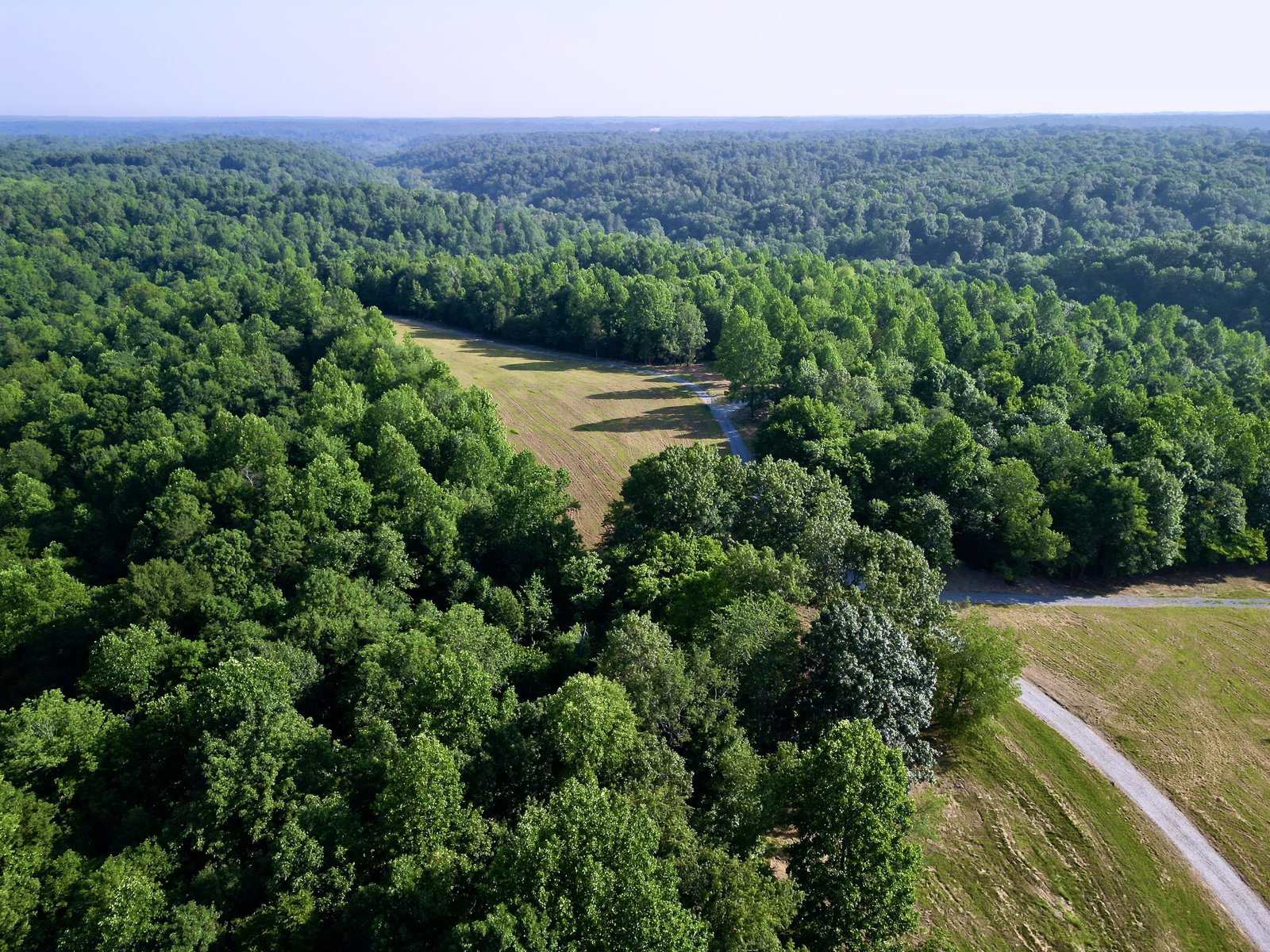
Davidson County Nashville area land parcels and development sites aerial
Section 04

Zoning Districts & Special Provisions

Metro Nashville's Title 17 zoning code includes agricultural, residential, multi-family, commercial, industrial, and overlay districts — one of the most comprehensive zoning frameworks in Middle Tennessee, administered by Metro Nashville's Department of Codes and Building Safety and the Metropolitan Planning Commission.

Title 17 Metro Code
AG

Agricultural District

Implements natural conservation and interim non-urban land use policies from Metro's general plan. Applied to areas unsuitable for urban-scale development due to severe environmental constraints, steep topography, potentially unstable soils, or flood propensity. Permits single-family, two-family, and mobile homes at very low density. Minimum 5-acre lot. Primarily concentrated in outer northwest Davidson County — Joelton, Whites Creek area, tracts along the Cheatham County line.

CoverageOuter northwest Davidson — Joelton, Whites Creek, Eatons Creek corridors
AR2a

Agricultural Residential District

A transitional agricultural district designed for areas not yet urban but positioned between the rural AG fringe and suburban residential zones. Minimum 2-acre lot. Permits single-family, two-family, and mobile homes. Intended for areas where public sanitary sewer and water supply are not yet practical. Like AG, the AR2a district is concentrated in the outer county but appears closer to existing development nodes than pure AG zoning.

CoverageTransitional areas between outer AG zone and suburban RS districts
RS Series

Single-Family Residential Districts (RS80–RS3.75)

The RS series governs the vast majority of Davidson County's residential land. RS80 (80,000 sq ft) through RS3.75 (3,750 sq ft) covers established neighborhoods from large-lot suburban (Bellevue, Bordeaux, outer Goodlettsville) down to urban infill lots in east and north Nashville. The -A variant districts (RS7.5-A, RS5-A, RS3.75-A) require walkable building placement standards while maintaining identical density to their companion districts.

CoverageMajority of unincorporated and suburban Davidson County residential land
RM Districts

Multi-Family Residential Districts

Metro Nashville's RM (multi-family) series is measured in units per acre rather than minimum lot size: RM2 (2 units/acre), RM4, RM6, continuing through higher densities. Multi-family zoning in Davidson County is concentrated along growth corridors, near transit nodes, and in Urban Design Overlay and Planned Unit Development areas. Relevant for assemblage plays and density-seeking development strategies in the urban core and close-in suburban corridors.

Key FactDensity measured in units/acre · Concentrated along transit and growth corridors
Commercial & Industrial

Commercial, Office & Industrial Zones

Commercial (CS, CN, CL, CF, CA, CB, CC) and office (OR, OL, OG, ORI) districts are concentrated along major corridors — Murfreesboro Pike, Nolensville Pike, Lebanon Pike, Gallatin Pike, Charlotte Pike, and Briley Parkway. Industrial zoning (IWD, IR, IG) is concentrated in the Whites Creek industrial corridor, along the Cumberland River, and in north Nashville. The Downtown Code (DTC) governs development in the urban core under a separate framework.

Key CorridorsMurfreesboro Pike · Gallatin Pike · Charlotte Pike · Whites Creek industrial area
Opportunity Zones

Federal Opportunity Zone Designations

Davidson County has 18 federally designated Opportunity Zones — among the highest concentration in Middle Tennessee. Zones are concentrated in north Nashville, the Murfreesboro Pike corridor, east Nashville near Five Points, Wedgewood Houston, Metro Center, and the east bank of the Cumberland River. OZ designation enables tax-advantaged capital gains investment through Qualified Opportunity Funds — relevant for developers and investors targeting these specific census tracts.

Count18 designated Opportunity Zones in Davidson County · North Nashville, east Nashville, Murfreesboro Pike
Our Take

Davidson County's zoning map tells you exactly how Nashville's growth story has played out — AG and AR2a in the outer northwest is the last frontier for true acreage, the RS series fills in the suburban ring, and the urban core is a complex mix of RS, R, RM, and commercial zoning with overlays layered on top. For land buyers, the practical question is always: what is the highest-density use this zoning supports, and what would it take to rezone? In Davidson County more than anywhere else in my market, the rezoning path is real but it runs through the Metropolitan Planning Commission and takes time. Know that before you make an offer on anything you intend to develop.
Section 05

Utilities & Infrastructure

Davidson County has Metro-level utility infrastructure throughout most of the county — electric from NES across 700 square miles, Metro Water Services for water and sewer in urbanized areas, and Piedmont Natural Gas for gas service — with the outer AG zone being the primary area where rural utility gaps apply.

Metro Infrastructure
Electric

Nashville Electric Service (NES)

Nashville Electric Service (NES) provides electric service to Davidson County and parts of six neighboring counties — nearly 460,000 customers across 700 square miles. NES purchases power wholesale from the Tennessee Valley Authority (TVA). Electric service is available throughout Davidson County including the outer AG-zoned areas near Joelton — this is not a gap utility in this county the way it can be in more rural markets.

ProviderNashville Electric Service (NES) · TVA wholesale · 700 sq mile service area
Water & Sewer

Metro Water Services

Metro Water Services (MWS) is the water, sewer, and stormwater utility for Nashville and Davidson County. Two water treatment plants serve the county: K.R. Harrington (200,000+ customers) and Omohundro. Three wastewater treatment plants: Whites Creek, Dry Creek, and Central. Public water is broadly available in the county including many rural areas; sewer follows a tighter service area map. For outer AG-zoned land, confirm MWS water line availability and sewer service area boundary directly with MWS before purchase.

ProviderMetro Water Services · Two water plants · Three WWTP · Confirm sewer boundary directly with MWS
Natural Gas & Internet

Gas, Broadband & Other Services

Piedmont Natural Gas serves Davidson County for natural gas. Coverage is broad in urbanized areas and along established residential corridors. Outer AG-zoned properties near Joelton and the Cheatham County line may be outside gas service lines — propane is the standard alternative for rural tracts. Broadband internet in Davidson County is generally strong in the urbanized core; the outer northwest corridor has more variability, with fiber expanding but satellite or fixed wireless sometimes the only option on very rural parcels.

Rural StandardPiedmont Natural Gas · Propane standard in outer AG zone · Fiber expanding in growth corridors
Our Take

Utilities in Davidson County are as good as it gets for a Middle Tennessee land buyer — NES is one of the better rural electric providers in the region, Metro Water Services water lines reach much further out than people expect, and Piedmont Gas covers most of the county. The real utility question in Davidson is sewer, not electric or water. I've described it before and I'll say it again: sewer access is the binary that separates a land deal worth $20,000 an acre from one worth $80,000 an acre in this county. Get the MWS sewer service area map and confirm exactly where the nearest line is before you make any offer on outer Davidson land.

Section 06

Sub-Areas & Key Corridors

Davidson County is not one market — the outer northwest AG fringe, the suburban ring, and the urban core each operate on completely different buyer profiles, pricing logic, and deal structures, and confusing one for another is expensive.

Know Your Area
Outer Northwest — Joelton / Eatons Creek

Last True Acreage in Davidson County

The Joelton community and surrounding corridors — Eatons Creek Road, Big Marrowbone Road, Little Marrowbone Road, Morgan Road, Lickton Pike — represent the last remaining area in Davidson County where you can buy genuine acreage at sub-Williamson prices. Zoned AG and AR2a, predominantly on septic and well, accessible via NES electric and in some areas Metro Water lines. Buyers are typically estate/private retreat buyers, timber and hobby farm buyers, and developers holding ahead of sewer extension. This is where we've done the bulk of our Davidson County land work.

Buyer TypeEstate buyers · Timber/hobby farm · Developers holding ahead of sewer · Sub-Williamson pricing
Goodlettsville / Bordeaux Corridor

Suburban Fringe Transitioning to Residential

The Goodlettsville area (including portions of north Davidson near Lickton Pike and Greer Road) sits in a transitional zone — AG and AR2a zoning on the outer edges, RS districts as you move toward the I-65 interchange. The 3108 Greer Road property (150-acre legacy farm) and 5142 Lickton Pike (14.5-acre homestead) are examples of what this zone looks like for buyers. Development pressure is real but slower here than the urban core. Legacy farm families are the primary sellers.

CharacterTransitional AG/AR2a to RS · Legacy farm sellers · I-65 proximity adds development upside
North & East Nashville — Infill

Developer and Investor Market

Inside the loop and close-in north/east Nashville, the land play is infill lots, teardown assemblages, and RS rezones targeting higher density under the RS or RM series. Buyers here are overwhelmingly developers and investors competing with institutional capital. Opportunity Zone designations in north Nashville, east Nashville (Five Points area), and the Murfreesboro Pike corridor create additional investor demand for qualifying projects. This is not acreage territory — it's small-lot development economics.

Buyer TypeDevelopers · Institutional capital · 18 OZ designations active in this corridor
Bellevue / West Davidson

Established Suburban — Limited Land Supply

Bellevue and western Davidson County are established suburban markets along Highway 70 and Interstate 40. Remaining land in this corridor is scarce — it's primarily RS-zoned infill lots, occasional larger tracts where old farm parcels haven't been fully subdivided, and commercial sites along the US-70/I-40 corridor. The buyer here is primarily the residential infill developer or the custom home builder looking for a single large lot. True acreage is nearly nonexistent.

CharacterRS-zoned infill · Scarce acreage · Custom home and small development buyers
Southeast Davidson — Antioch / Murfreesboro Pike

High-Growth Commercial and Residential Corridor

The Antioch area and Murfreesboro Pike corridor represent Davidson County's highest-growth southeast quadrant. Commercial zoning is active along Murfreesboro Pike. Opportunity Zone designations apply to portions of this corridor, driving institutional interest. Residential land demand tracks the spillover from Rutherford County growth pushing northward. Industrial and logistics demand is real here given proximity to I-24 and the airport.

Key DriverOZ designations · Airport proximity · I-24 access · Commercial and logistics demand
4269 Pecan Valley Road Context

Large Backwoods Davidson Tract — Reference Sale

The 2956 Morgan Road area (Joelton, 41+ acres) and the 4269 Pecan Valley Road sale (319 acres, $3.676M) illustrate the outer Davidson County large-tract market. Pecan Valley Road — deep AG-zoned timber and pasture land at roughly $11,500/acre sold — represents the floor pricing for large, secluded Davidson County tracts. As sewer infrastructure edges closer to the northwest corridor over time, these outer tracts are the ones that reprice fastest when a utility extension is announced.

Reference Sale319 acres · $3,676,000 · ~$11,500/acre · Joelton corridor outer AG
Our Take

If I had one piece of advice for a buyer coming into the Davidson County land market right now, it's this: the outer northwest — Joelton, Eatons Creek, the Marrowbone corridors — is the only place in this county where you can still buy acreage that doesn't already reflect the full Nashville premium. Once Metro Water Services extends a sewer line up toward that area, the repricing happens fast and it's permanent. I've watched it happen in other parts of Davidson. The buyers who got in ahead of the infrastructure win. The ones who waited until the line was confirmed paid 40% more.

Section 07

Market Overview & Buyer Considerations

Davidson County land prices are Nashville-adjacent in the full sense — the urban core competes with institutional capital, the suburban ring is mostly built out, and genuine opportunity for acreage buyers is concentrated in the outer northwest where AG zoning and septic requirements have kept prices from fully reflecting Davidson County's location.

Active Market
Pricing

Price Per Acre Ranges

Pricing in Davidson County spans a wider range than any other Middle Tennessee county we cover, reflecting the diversity of land types and sub-markets. Outer AG-zoned acreage in the Joelton corridor has transacted in the $10,000–$20,000/acre range for large, secluded tracts (reference: 4269 Pecan Valley Road at approximately $11,500/acre for 319 acres). Smaller AG and AR2a tracts closer to utility availability trade at $25,000–$50,000/acre. Suburban RS infill lots in the metro area trade on a per-lot basis rather than per-acre. Urban infill in the core and Opportunity Zone areas can trade at $200,000–$500,000+ per lot depending on achievable density.

RangeOuter AG: $10,000–$20,000/acre · Suburban fringe: $25,000–$50,000/acre · Urban infill: per-lot basis
Growth Drivers

What's Moving the Market

Davidson County's land market is driven by Nashville's continued population and employment growth, corporate relocations to the metro area, and ongoing urban densification. Amazon's second headquarters, Oracle's campus relocation to the East Bank of the Cumberland, and ongoing healthcare industry expansion (Vanderbilt, HCA) all generate demand for residential and commercial land. The East Bank IDA (Industrial Development Authority) area is reshaping the riverfront land market. Opportunity Zone investment continues to flow into north and east Nashville infill corridors.

Key DriversAmazon · Oracle East Bank · Healthcare industry · OZ investment · Population growth
Buyer Profile

Who's Buying Here

Davidson County attracts the widest buyer mix in our market. Urban core and suburban infill: developers, builders, and institutional capital competing for any developable lot. Outer AG zone (Joelton corridor): estate buyers from Nashville wanting privacy and acreage, hobby farm and recreational buyers, and value-seeking developers holding ahead of infrastructure. Opportunity Zone areas: institutional Qualified Opportunity Fund investors and value-add developers targeting the OZ tax incentive. Large tracts (100+ acres): legacy buyers and land investors willing to wait for the infrastructure to catch up.

Most ActiveDevelopers in urban core · Estate buyers in outer northwest · OZ investors in north/east Nashville
Our Take

Davidson County is the hardest market to buy land in at a good price — the information is broadly available, the competition is well-capitalized, and most of the obvious value has already been captured. The opportunity that still exists is in the outer northwest AG corridor, where septic requirements and lack of sewer have kept institutional buyers out. That dynamic won't last forever. My read right now is that anyone with a 5–10 year horizon who can identify a well-zoned 20-to-50-acre AG tract in the Joelton/Eatons Creek area with a good road frontage situation is in a strong position. The fundamentals of Nashville aren't going away, and that infrastructure will eventually follow the growth.


Active Listings in Davidson County

View all current listings across Middle Tennessee.

Neighboring County Guides

Comparing options? Explore our guides for neighboring counties: Williamson County, Cheatham County, Sumner County, Wilson County. Or see all eight counties in our complete buyer's guide.

Questions About Davidson County Land?

We know the sellers, the zoning, and the deals that aren't on the MLS. Tell us what you're looking for.

Your information is never shared or sold. We'll respond within one business day.

Thank you — we'll be in touch within one business day.
Scenic Land & Farms  ·  Zeitlin Sotheby's International Realty

Market Intelligence

See what the data says about Davidson County.

Active listings, sold prices, days on market, and trends — updated weekly in our free Land Intelligence tool.

Explore Davidson County Data →