Zeitlin Sotheby's International Realty  ·  615.383.0183  ·  Each office is independently owned and operated.
Middle Tennessee Land Guide

Maury County Land for Sale — Buyer's Guide

Live Market Data · Scenic Land Intelligence Explore live →

Maury County — Closed Transaction Data

Based on verified closed land transactions in Maury County. Pulled live from the Scenic Land Intelligence database — updates automatically as new closings are recorded.

Median $/Acre
Typical Range (P25–P75)
Median Tract Size
Median Days on Market
Closed Transactions

Live data — pulled at page load from the Scenic Land Intelligence transaction database. Median $/acre is the midpoint of all qualified closings (tracts 1+ acres); P25–P75 is the typical range (middle 50%). Outliers above $5M/acre and below $100/acre excluded.

Maury County is the most dynamic land market in Middle Tennessee right now — and the reason is industrial. The EV battery manufacturing buildout and automotive supply chain expansion along the US-412 corridor changed the county's economic character in ways that ripple across every land category, from raw agricultural ground to residential development tracts. Understanding those dynamics is essential before you buy here.

This guide covers Maury County's zoning districts, minimum lot sizes, septic infrastructure, greenbelt enrollment, utility access by sub-area, and where current demand is being driven. Data is sourced directly from Maury County's published zoning ordinance (updated November 17, 2025, maurycounty-tn.gov). Columbia and Spring Hill each maintain their own subdivision standards separate from county regulations — both are addressed below.

If you're evaluating land in Columbia, Spring Hill, along the Duck River corridor, or in the rural southern reaches of the county around Culleoka and Hampshire, this guide will give you the framework you need. For a broader overview of Middle Tennessee land buying, see our Land Buyer's Guide. For comparison with the county directly to the north, see our Williamson County guide.
← Back to All County Guides
Terrain at a Glance

What the land itself is telling you.

In Maury County, Tennessee, the land unfolds across a subtle symphony of ridges and basins, where the Western Highland Rim's cherty knobs drop into the rolling outer Central Basin's phosphatic limestone hills, elevations spanning 479 to 1,214 feet above sea level. The Duck River, Tennessee's longest free-flowing waterway, carves fertile bottomlands and terraces, flanked by Williamsport Lakes and scattered reservoirs that invite quiet recreation amid pasture and cropland. Dominant Mountview, Dickson, Bodine, and Maury silt loams—deep, well-drained profiles born of limestone residuum—support thriving hayfields, cattle grazing, and row crops on 39% cropland and 36% pasture, while 22% woodland cloaks the steeper slopes. Here, in the heart of the Interior Low Plateaus, thoughtful stewards find resilient soils for sustainable farms, riverfront retreats, and timbered tracts that echo the county's agricultural heritage.

Maury County — Quick Facts

Physiographic Region
Interior Low Plateaus — Central Basin and Highland Rim
Elevation Range
479–1,214 ft above sea level
Area
616 sq mi · County seat: Columbia
Dominant Landforms
Maury County spans the transition from the Western Highland Rim's dissected ridges and steep escarpment slopes to the rolling outer and inner Central Basin, featuring phosphatic limestone outcrops, limestone sinks, rocky glades, and narrow river valleys. The terrain rises abruptly 300 feet from basin to rim, with hilly relief on cherty limestones and gentler slopes on purer limestones. Duck River terraces and bottomlands add level areas amid the karst-influenced landscape.
Major Waterways
Duck River, Williamsport Lakes, Campbell Lake, local creeks
Dominant Soils
Mountview, Dickson, Bodine, Maury silt loams; well-drained silt loams suited for crops, pasture, and hay on limestone residuum
Land Use
39% cropland, 36% pasture, 22% forested, 3% other (on farmland; ~34% of county farmland)
Jump to Section
Section 01

Minimum Lot Sizes & Zoning Districts

The A-1 Agricultural-Forestry district governs most of unincorporated Maury County with a 100 ft minimum lot width for platted lots and 200 ft for non-platted ground. R-1 Suburban Residential applies near municipalities at 40,000 sq ft minimum. The AP Agricultural Preservation district acts as a protective overlay against development pressure on the county's most productive farmland. Columbia and Spring Hill each operate under their own subdivision standards, which apply within their respective incorporated boundaries.

Verified Data
A-1 — Agricultural-Forestry

Agricultural-Forestry District

The A-1 district is the primary land classification across unincorporated Maury County, covering the vast majority of rural land including crop ground, pasture, timber tracts, and undeveloped acreage well removed from municipal influence. The minimum lot width in A-1 is 100 ft for platted lots. Non-platted parcels carry a more restrictive 200 ft minimum lot width, reflecting the county's intent to preserve the rural character of land that has not been formally subdivided. A-1 accommodates agricultural operations of all types, single-family residential uses, and agricultural-related commercial activities, while intentionally limiting the density of non-agricultural development. Source: maurycounty-tn.gov, updated November 17, 2025.

Key NumbersA-1: 100 ft minimum width (platted) · 200 ft minimum width (non-platted)
R-1 — Suburban Residential

Suburban Residential District

The R-1 Suburban Residential district applies in areas closer to Columbia and other municipalities where suburban-scale development is anticipated and infrastructure — water, sewer, roads — is available or forthcoming. The minimum lot area in R-1 is 40,000 sq ft. This district accommodates single-family detached residential development and community facilities at densities appropriate to areas receiving urban-level services. As Spring Hill continues to annex land in northern Maury County, parcels that were previously subject to county R-1 or A-1 standards are being absorbed into Spring Hill's municipal subdivision regulations, which may impose different requirements. Buyers should confirm whether their target parcel falls within Spring Hill's or Columbia's city limits before assuming county zoning applies.

Key NumberR-1: 40,000 sq ft minimum lot area
AP — Agricultural Preservation

Agricultural Preservation District

The AP Agricultural Preservation district is a protective overlay designed to shield Maury County's most productive agricultural land from development pressure. Maury County has historically been one of Tennessee's leading beef cattle counties, and the Duck River bottomland and surrounding agricultural ground represent some of the highest-quality row crop and pasture land in the state. The AP designation signals the county's intent to maintain those lands in agricultural use — a critical consideration for buyers who might envision subdivision or commercial development on what appears to be raw ground. AP-designated land typically cannot be subdivided to the same density as A-1 and is intended to remain in agricultural production. Confirm AP status on any rural purchase.

Key FactAP: Protective overlay — development options significantly limited
Columbia City Limits

Columbia Subdivision Standards

Columbia, as Maury County's seat and largest municipality, maintains its own subdivision regulations and zoning ordinance independent of county standards. Land within Columbia's city limits is subject to Columbia's standards — not the A-1 or R-1 county minimums. Columbia's urban development framework reflects the infrastructure investment the city has made in its utility system, road network, and public services. Buyers looking at properties listed as Columbia addresses should determine whether they are truly within city limits or in the unincorporated county near Columbia, as the regulatory environment and lot yield potential can differ substantially.

Key FactColumbia city limits: subject to Columbia's own subdivision ordinance, not county code
Spring Hill Annexation

Spring Hill Municipal Standards

Spring Hill's aggressive annexation activity in northern Maury County is one of the most consequential regulatory dynamics in the entire Middle Tennessee land market. Spring Hill's city limits have expanded significantly south and west as residential development pressure from Williamson County moves into Maury. When a parcel is annexed by Spring Hill, it exits county zoning jurisdiction and becomes subject to Spring Hill's own planning and subdivision standards. This matters enormously for lot yield calculations, permitted uses, and utility connection requirements. Buyers targeting northern Maury should verify current annexation boundaries with Spring Hill and Maury County planning offices before making any assumptions about allowable density or permitting.

Key FactSpring Hill annexation ongoing — verify jurisdiction before contract
Industrial Corridors

Industrial Zoning & Special Districts

The industrial transformation of Maury County — anchored by EV battery manufacturing and automotive supply chain facilities along the US-412 corridor and near the US-412/I-65 interchange area — has been accompanied by industrial zoning designation that was not present at this scale five years ago. Parcels in or near established industrial corridors may carry industrial zoning or may be targeted for industrial rezoning. For investors and commercial buyers, understanding which areas have been designated or are being pursued for industrial use is essential — industrial-zoned land in Maury County commands significant premiums over agricultural ground in the current market.

Key FactIndustrial expansion along US-412 corridor — verify zoning status on commercial inquiries
Our Take

The A-1 district covers the vast majority of what people think of when they think of Maury County land, but the platted vs. non-platted distinction is one that catches buyers off guard. That 200 ft width requirement on non-platted ground is a real constraint — it limits what you can split and how you can develop without going through a formal subdivision process. The bigger issue in northern Maury right now is simply keeping track of where Spring Hill's city limits are. That boundary is moving, and it affects your zoning, your lot yield, and your utility connection requirements. Confirm jurisdiction first — everything else follows from that.

Section 02

Septic & Sewer

Maury County's sewer infrastructure is concentrated in two zones: Columbia's utility system serves the county seat and immediate surroundings, while the Spring Hill Utility District extends service into the northern part of the county. The southern and western portions — including the Duck River bottoms, Culleoka, and Hampshire — are largely on septic, maintaining the rural character that defines those areas. TDEC governs all septic permits statewide.

Infrastructure Varies
Columbia Utilities

Columbia City Utility System

Columbia's municipal utility system provides water and sewer service to the county seat and a surrounding service area that extends to some nearby unincorporated areas. For buyers looking at land near Columbia's core, utility access is typically available — but the extent of service areas changes as the city grows, and connection fees, capacity reservations, and extension costs can be significant on larger parcels or new subdivisions. Buyers should contact the City of Columbia utility department to confirm service availability at any specific address or parcel and to understand any required system development charges before closing. Columbia's industrial growth along US-412 has driven utility expansion in those corridors as well.

Key FactColumbia utilities serve county seat and surrounds — confirm service area with city
Spring Hill Utility District

Northern Maury Sewer Service

The Spring Hill Utility District extends sewer and water service into the northern portions of Maury County, following the residential growth corridor that runs south from Williamson County. This infrastructure buildout is one of the primary enablers of northern Maury's rapid residential development — without utility access, lot yield and development intensity would be far more limited. The district's service territory is tied closely to Spring Hill's annexation activity, so as Spring Hill expands south into Maury, utility availability tends to follow. For buyers evaluating northern Maury development land, understanding which parcels are within the Spring Hill Utility District service area is a critical first step in any feasibility analysis.

Key FactSpring Hill Utility District serves northern Maury — service follows annexation activity
TDEC Septic Standards

Rural Septic Requirements

All septic system permits in Tennessee are issued under TDEC (Tennessee Department of Environment and Conservation) authority, regardless of county. Any parcel outside a municipal or utility district sewer service area requires a TDEC-approved septic system before a dwelling can be occupied. Approval is based on a soil evaluation and percolation test — not the parcel's acreage alone. The Duck River bottomlands, Hampshire, and Culleoka areas operate predominantly on individual septic systems. Soil conditions in river bottom areas can be variable — deep, productive agricultural soils in well-drained locations often perc well, but low-lying or frequently flooded areas may face challenges. A pre-contract perc test is non-negotiable on any rural Maury purchase.

Key FactTDEC septic approval required on all rural parcels · Pre-contract perc test essential
Southern & Western Maury

Outer County — Genuine Rural Character

The southern and western portions of Maury County — roughly the areas around Culleoka, Hampshire, and southern reaches below Columbia — remain largely without municipal sewer infrastructure. This is not a deficiency so much as a defining characteristic: these areas attract buyers specifically because they are not in the path of utility extension and suburban development pressure. Cattle operations, row crop farms, and timber tracts in these areas operate entirely on individual wells and septic systems, which is standard practice throughout rural Middle Tennessee. For buyers seeking genuine agricultural land with no suburban encroachment, southern and western Maury is where to look — but verify septic feasibility on every parcel.

Key FactSouthern/western Maury: wells and septic standard — rural character intact
Our Take

Sewer access in Maury County is essentially a dividing line between two completely different markets. In the north near Spring Hill and along the Columbia corridors, you have development-grade land with utility access — those parcels price accordingly. In southern and western Maury, you're buying genuine agricultural ground where the absence of municipal infrastructure is a feature, not a problem. The TDEC perc requirement is the same everywhere — never skip it. I've seen rural buys in the Duck River area where soil conditions were perfect, and I've seen tracts that looked ideal on paper fail a perc test entirely. Do your homework before you commit.

Section 03

Greenbelt Tax Assessment

Maury County has deep agricultural roots — it is consistently ranked among Tennessee's top beef cattle counties, and its farmland has been in continuous production for generations. Greenbelt enrollment is widespread across the county's agricultural land base. The state minimum for agricultural greenbelt is 15 acres; open space qualifies at 3 acres. With development pressure pushing land values up, rollback exposure on any agricultural purchase in Maury County deserves careful analysis before you close.

Active Ag County
State Law Requirements

Tennessee Greenbelt Basics

Tennessee's Agricultural, Forest, and Open Space Land Act of 1976 allows qualifying land to be assessed at its agricultural use value rather than its market value — a distinction that can mean dramatically lower property tax bills on productive farm ground. Agricultural land requires a minimum of 15 acres to qualify (or 10 acres if the owner has a contiguous qualifying parcel). Forest land also requires 15 acres. Open space land qualifies at a minimum of 3 acres. The income test requires average annual gross income of at least $1,500 from agricultural use over the three preceding years, or evidence of a 25-year farming history. Maximum enrollment is 1,500 acres per county per owner.

State MinimumsAg/Forest: 15 acres · Open space: 3 acres · Income test: $1,500 avg/year
Maury County Agriculture

How Greenbelt Works Here

Maury County's agricultural heritage runs deep. The county is one of Tennessee's premier beef cattle producers, with established cow-calf and stocker operations across the rolling terrain south and west of Columbia. Duck River bottomland carries some of the highest-quality row crop soils in the state — corn, soybeans, and hay production are common. These established agricultural operations have been enrolled in greenbelt for decades, in many cases, and the income qualifications are easily satisfied. The Maury County Assessor's office administers greenbelt enrollment, and given the county's agricultural profile, the process is well-established and routine for qualifying properties.

Key FactBeef cattle and row crops primary qualifying uses · Assessor handles enrollment
Duck River Bottom Value

Premium Agricultural Ground

The Duck River corridor represents some of the most productive agricultural land in the entire state of Tennessee. Deep, well-drained alluvial soils with high organic matter content support exceptional crop yields — this is ground that serious agricultural buyers compete for. Duck River bottom parcels with greenbelt enrollment have historically carried significant tax advantages that made long-term ownership financially viable even at rising market prices. As development demand from northern Maury pulls agricultural land values up across the county, the greenbelt tax benefit has become increasingly important as a carrying cost management tool for farmers and long-term landowners. Expect this ground to become harder to find as the decade progresses.

Key FactDuck River bottom: premium row crop soils — among the most productive in Tennessee
Rollback Tax Exposure

What Changes in Use Costs You

When greenbelt-enrolled land is sold for development, subdivided, or converted to a non-qualifying use, Tennessee law requires payment of rollback taxes — the difference between what was paid under agricultural assessment and what would have been owed at market value — for the three most recent tax years. In Maury County's current market, where agricultural land values have been pulled upward by industrial and residential development demand, three years of rollback on a large tract can represent a substantial sum. Buyers who intend to develop or subdivide land that is currently in greenbelt must factor rollback into their acquisition cost, and the responsibility for that payment should be addressed explicitly in the purchase contract.

Key Fact3-year rollback on use change · Negotiate responsibility in contract — it is a real cost
Our Take

In Maury County, assume greenbelt is enrolled on any legitimate agricultural tract — the question is always what the rollback exposure is. As land values have risen with industrial demand pulling everything up, the delta between agricultural assessment and market assessment has grown. That makes rollback exposure in Maury more significant than it might have been five years ago on the same parcel. I always calculate rollback before contract and make it a negotiating point. Sellers who have farmed the land for decades sometimes don't fully understand what they'll owe at closing, particularly if they're selling to a developer — and that calculation should happen before you're under contract, not at the closing table.

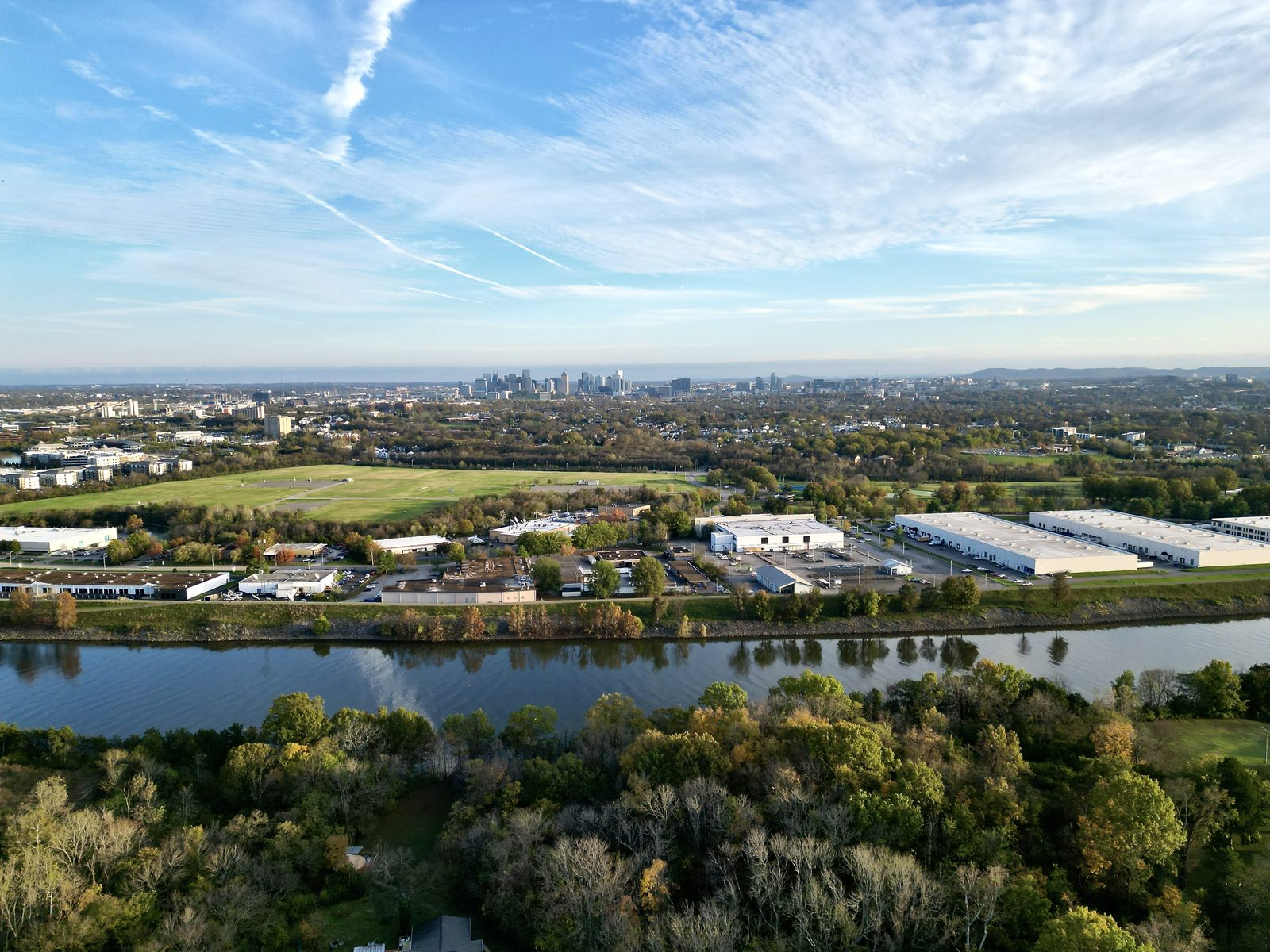
Maury County Tennessee farmland and pastures aerial panorama
Section 04

Zoning Districts & Special Provisions

Maury County's zoning structure is anchored by A-1 Agricultural-Forestry across the unincorporated county, with R-1 Suburban Residential near municipalities and the AP Agricultural Preservation overlay protecting the county's most valuable farmland. Industrial zoning has expanded significantly along the US-412 corridor and near interstate access points, reflecting the industrial investment that has fundamentally reshaped Maury County's economic profile. Columbia and Spring Hill each operate under their own municipal zoning frameworks.

Updated Nov 2025
A-1 — Agricultural-Forestry

Agricultural-Forestry District

The A-1 district is the dominant classification across Maury County's unincorporated land — the baseline zoning for working farms, timber tracts, rural residential acreage, and large undeveloped parcels. Permitted uses include all forms of agriculture, forestry, single-family residential, and agricultural accessory uses. The district is designed to preserve the rural character of unincorporated land while allowing the agricultural operations that have defined the county's identity for generations. Minimum lot width of 100 ft (platted) or 200 ft (non-platted) are the key dimensional standards, with lot area requirements calibrated to the county's rural density expectations and TDEC septic requirements.

CoverageDominant district across unincorporated Maury County
R-1 — Suburban Residential

Suburban Residential District

The R-1 district applies in areas adjacent to Columbia and other municipalities where suburban-scale development is planned and urban-level services are available. The 40,000 sq ft minimum lot area reflects a density appropriate to areas with water and sewer access. As development pressure from Spring Hill and Williamson County has pushed south, R-1 or equivalent municipal zoning has followed utility infrastructure into northern Maury. Buyers evaluating R-1 parcels near Columbia or in the Spring Hill annexation zone should understand that lot yield, permitted uses, and setback requirements differ from A-1 — and that municipal standards may apply in lieu of the county R-1 code.

CoverageApplied near Columbia and municipalities with urban-level services
AP — Agricultural Preservation

Agricultural Preservation District

The AP district is Maury County's policy statement about its most valuable agricultural land. Applied as a protective overlay, AP zoning is intended to keep identified agricultural land in productive use and resist conversion to residential subdivisions or commercial development. In a county where industrial growth has driven land value appreciation across the board, the AP designation is a real constraint — it is not simply a default agricultural classification like A-1, but an intentional protective measure. Buyers with development plans should explicitly verify whether a target parcel carries AP designation before making assumptions about what can be built or subdivided.

CoverageProtective overlay — development options significantly limited by design
Industrial Zoning

Industrial Corridors — US-412 & Interstate

The expansion of industrial zoning in Maury County has been one of the most consequential land use changes in the county's recent history. The EV battery manufacturing facilities and automotive supply chain operations that have located along the US-412 corridor and near the I-65 interchange have driven industrial zoning designation into areas that were agricultural ground not long ago. Industrial land in these corridors commands premium prices — far above agricultural values — and the competition for well-located industrial tracts with strong utility access and transportation connectivity has been intense. Buyers evaluating industrial or industrial-adjacent parcels should understand current zoning designations, planned infrastructure improvements, and where industrial expansion is most likely to continue.

Key CorridorUS-412 and I-65 interchange areas — industrial demand highest here
Columbia City Zoning

Columbia Municipal Framework

Columbia maintains a comprehensive municipal zoning ordinance independent of Maury County's code. The city's framework covers residential, commercial, and industrial uses within city limits and addresses the Columbia-specific development patterns — the historic core, the US-412 industrial corridor, and the suburban growth areas north of the city. Columbia has been a focus of significant industrial investment, which has driven commercial and industrial land demand in and around the city limits. Buyers interested in land within Columbia's boundaries should work directly with the City of Columbia planning department to understand applicable zoning, permitted uses, and any overlay districts that may apply.

Key FactColumbia: independent municipal zoning — contact Columbia Planning Department
Spring Hill Zoning

Spring Hill's Regulatory Reach into Maury

Spring Hill's annexation activity in northern Maury County means that a growing portion of what was recently county-zoned land now falls under Spring Hill's municipal planning authority. Spring Hill's zoning ordinance governs annexed land and applies its own residential, commercial, and mixed-use standards — which may differ from Maury County's A-1 or R-1 minimums. For residential development buyers in northern Maury, Spring Hill's standards on lot size, setbacks, and subdivision design are as relevant as the county code — perhaps more so. Developers and investors in northern Maury should track Spring Hill's annexation map closely, as the regulatory environment on a given parcel can change with the next annexation ordinance.

Key FactSpring Hill annexation = Spring Hill zoning · Track annexation boundaries actively
Our Take

What most buyers don't realize about Maury County zoning is that the map is actively changing — and it's not just Spring Hill annexations. Industrial reclassifications along the US-412 corridor have been happening incrementally, and parcels that were A-1 agricultural a few years ago are now being absorbed into industrial use areas or being evaluated for rezoning. If you're buying agricultural land in any corridor that has industrial adjacency, you need to understand the rezoning risk — both as a potential upside if you're a land investor, and as a real threat to agricultural value and rural character if you're an ag buyer who doesn't want heavy industry next door. This county requires site-specific research. The county average tells you almost nothing useful.

Section 05

Utilities & Infrastructure

Maury County's utility infrastructure divides along geographic and economic lines. The industrial corridors near Columbia and Spring Hill have strong utility access — the EV and automotive buildout required it. Rural tracts in the south and west depend on wells and individual septic. Middle Tennessee Electric serves rural areas for power; natural gas availability drops off quickly outside Columbia and Spring Hill. Understanding which utilities are available at a specific parcel is essential before evaluating any development potential.

Varies by Area
Electric Service

Middle Tennessee Electric & City of Columbia

Middle Tennessee Electric Membership Corporation (MTEMC) provides electric service to the majority of unincorporated Maury County and is one of the largest electric cooperatives in the state. Service reliability in rural Maury is generally strong for residential and light agricultural use. The City of Columbia maintains its own electric utility for the municipal area. Industrial corridors have required significant capacity investment to support EV battery manufacturing and automotive supply chain facilities, and that infrastructure buildout has generally strengthened the electric grid in the industrial areas. For rural tracts in southern and western Maury, verify MTEMC service availability and any connection costs for parcels that are not currently improved.

Key FactMTEMC serves rural county · Columbia electric serves city limits · Industrial corridors have strong capacity
Natural Gas

Columbia & Spring Hill Coverage Only

Natural gas availability in Maury County is essentially limited to Columbia, Spring Hill, and their immediate service areas. Outside these municipalities and their suburban growth corridors, natural gas service is not available — propane is the standard alternative for rural properties that require gas for heating or cooking. For agricultural operations and rural residential uses, this is generally not a significant constraint — most rural Maury properties have been built and operated without natural gas. For industrial or commercial development projects that require natural gas, proximity to Columbia or Spring Hill — and the existing gas infrastructure in those areas — becomes an important site selection criterion.

Key FactNatural gas: Columbia and Spring Hill only · Propane standard in rural county
Water Lines

Municipal Water vs. Private Wells

Water line infrastructure in Maury County has been expanding with residential and industrial growth, particularly in northern Maury where development pressure from Spring Hill has driven utility extension. Municipal water is available in Columbia, Spring Hill, and along many of the primary growth corridors. However, a significant portion of the county's rural land — particularly in the south and west — relies on private wells. Well quality and yield vary across the county depending on local geology. Limestone-based geology in some areas can produce excellent well water, while other areas present challenges. Any rural purchase on private well water should include a professional well test as part of due diligence: yield, potability, and water quality all matter.

Key FactMunicipal water expanding with growth · Wells common in south/west — test before buying
Industrial Utility Access

EV & Automotive Corridor Infrastructure

The industrial buildout in Maury County — most notably the large-format EV battery manufacturing facilities and automotive supply chain operations that have located in the county — required substantial infrastructure investment in electric capacity, water, sewer, and in some cases natural gas. That investment has concentrated in defined industrial corridors and has made those areas significantly more utility-rich than the surrounding agricultural land. For commercial and industrial buyers, proximity to established industrial infrastructure is a major site selection factor — the cost of extending utilities to a greenfield industrial site outside established corridors can be prohibitive. Well-located industrial parcels with existing utility access command the highest prices in the current Maury County market.

Key FactIndustrial corridors: strong utility access from buildout investment · Greenfield extension costly
Our Take

Utilities in Maury County are a tale of two counties. North of Columbia and in the Spring Hill orbit, infrastructure is coming — or is already there — and development land prices reflect that. South and west of Columbia, you're on wells and propane, and that's perfectly fine for the agricultural and rural residential buyer who wants that character. The industrial corridor story is different from both: those areas now have industrial-grade utility infrastructure that took significant public and private investment to install, and that's reflected in the land values. The mistake buyers make is assuming that "Maury County" means one thing across the whole market. The corridor you're in matters more than the county name.

Section 06

Sub-Areas & Key Corridors

Maury County is not one market — it is four distinct land markets sharing a county boundary. Northern Maury near Spring Hill, the Columbia core, the Duck River corridor, and the southern and western rural reaches each have their own demand drivers, price dynamics, utility profiles, and buyer profiles. Knowing which sub-market you're evaluating is the starting point for any serious Maury County land analysis. For buyers coming from Williamson County who are looking for a comparable but more affordable market, see our Williamson County guide for context.

Four Distinct Markets
Northern Maury / Spring Hill Border

Williamson County Spillover Zone

Northern Maury County is experiencing the fastest residential development pressure in the county and arguably among the most intense in all of Middle Tennessee outside Williamson County proper. The Spring Hill growth corridor has pushed well south of the Williamson line, and buyers who have been priced out of Williamson County are moving into northern Maury in significant numbers. Land values in this sub-area have appreciated faster than anywhere else in the county over the past five years, and that trajectory shows no sign of reversing. Parcels with Spring Hill utility access and proximity to the Spring Hill/Columbia employment base are commanding prices that would have been unimaginable in Maury County a decade ago. Development land with residential potential near the Spring Hill metro is among the most competitive acquisition targets in the entire Middle Tennessee market.

Price TrendHighest appreciation in county · Residential development pressure ongoing
Columbia & Surrounds

County Seat — Industrial Growth Hub

Columbia is the economic center of Maury County and has been transformed by the industrial investment that has come to the county over the past decade. The county seat's utility infrastructure, road network, and public services give it the capacity to accommodate significant commercial and industrial growth — capacity that has been tested by the scale of EV and automotive industry investment in the area. Commercial land along US-412 has appreciated dramatically as industrial users compete for well-located sites with utility access. Residential land near Columbia maintains steady demand driven by the county's own employment base. Columbia is where you find the strongest infrastructure, the deepest local market, and the widest range of land use options in the county.

Price TrendIndustrial demand driving appreciation · Strongest utility infrastructure in county
Duck River Corridor

Prime Agricultural Bottomland

The Duck River corridor is Maury County at its most purely agricultural — and some would say at its finest. The alluvial bottomlands along the Duck River support the kind of deep, fertile soils that produce exceptional yields and have supported generations of farming families. This ground is genuinely productive: corn, soybeans, hay, and cattle operations all perform well in the river bottom environment. Duck River bottom land with row crop production history and established drainage is increasingly hard to find, as appreciation has made farm sellers more reluctant to sell and has brought more buyers into competition for quality tracts. For agricultural buyers — farmers, institutional ag investors, conservation buyers — the Duck River corridor represents the top tier of what Maury County offers. Expect to pay for it, and expect competition.

Price TrendPremium ground — increasingly scarce · Institutional and conservation buyer interest growing
Southern/Western Maury — Culleoka, Hampshire

Genuinely Rural Land Market

The southern and western portions of Maury County — Culleoka, Hampshire, and the rural reaches below Columbia — are where you find land that is genuinely outside the development pressure zone. Cattle operations, crop farms, and timber tracts in this area operate at prices that still reflect agricultural use value more than development speculation, making this the most accessible entry point for ag-focused buyers in the county. Limited utilities — wells, propane, individual septic — are the norm and are generally not constraints for buyers who want working farm ground. Prices are materially lower than northern Maury, and the agricultural character of the land is intact. For buyers who want rural Maury without paying the Spring Hill premium, southern and western Maury delivers. For investors, this is where patient appreciation potential lives — infrastructure will come eventually.

Price RangeMost affordable in county · Agricultural use values prevail · Long-term appreciation potential
Our Take

If I had to explain Maury County in one sentence to a first-time buyer, it would be this: tell me which of the four corridors you're focused on, and I'll tell you what kind of deal you're doing. Northern Maury near Spring Hill is a development land play — you're buying residential demand and paying for it. Columbia and US-412 is an industrial and commercial story — fundamentals changed and there's real money at work here. The Duck River is an agricultural play for serious farm buyers willing to pay for quality. Southern and western Maury is patient capital — agricultural values today, appreciation potential as the county grows. None of these markets is better than the others. They're just different. Buyers who understand that leave Maury County with better deals.

Section 07

Market Overview & Buyer Considerations

Maury County's land market fundamentally changed with the industrial buildout — EV battery manufacturing and automotive supply chain investment created demand that had no precedent in the county's history. That industrial gravity is now pulling residential, commercial, and agricultural land values upward across the board. Price ranges span from $8,000 per acre on southern rural ground to $50,000 per acre and above on industrial-grade sites near major infrastructure corridors. Understanding current demand by corridor is essential for pricing any parcel accurately. If you're evaluating land across multiple Middle Tennessee counties, our Land Buyer's Guide and direct consultation are the right starting points.

Active Market
Industrial Impact

EV & Automotive — The Demand Catalyst

The arrival of large-scale EV battery manufacturing and automotive supply chain facilities in Maury County represented a fundamental demand shift — not a cyclical uptick. These facilities brought jobs, population growth, and infrastructure investment that changed the county's trajectory. The demand for industrial land near established infrastructure corridors — US-412, I-65, and their interchange — has created a tier of Maury County land values that simply didn't exist five years ago. Industrial sites commanding $30,000 to $50,000+ per acre or higher in established corridors have reset expectations for commercial land throughout the county. Adjacent agricultural and residential land has been pulled upward by that same gravity. Buyers entering the Maury market for the first time need to understand that pre-industrial price histories are not reliable benchmarks for today.

Price TierIndustrial-grade sites: $30,000–$50,000+ per acre in established corridors
Residential Growth

Spring Hill Spillover Moving South

Residential growth pressure is migrating south from Spring Hill into Maury County at a pace that shows no sign of slowing. Buyers priced out of Williamson County are finding northern Maury — particularly areas accessible to Spring Hill's schools, utilities, and employment base — to be a viable alternative. Development land with residential potential in the Spring Hill orbit has appreciated significantly, and the trajectory reflects genuine demand rather than speculation. Builders, developers, and individual buyers are all active in northern Maury, creating a competitive market for well-located residential land with utility access. The residential market in Maury County today bears little resemblance to where it was before Spring Hill's southward expansion began in earnest.

Price TierNorthern Maury residential development land: $15,000–$35,000+ per acre
Agricultural Land Values

Farm Ground Pulled Upward by Development

Agricultural land values in Maury County are no longer determined solely by agricultural economics. The industrial and residential demand pulling on land prices throughout the county has affected agricultural values — particularly on tracts that have any plausible future development path. Duck River bottom ground with strong production history is trading at prices that reflect both its agricultural productivity and its scarcity premium as a finite natural resource. Southern and western Maury agricultural land, further from the development pressure, still prices closer to pure agricultural use value — but even those areas have seen appreciation as buyers recognize the long-term trajectory. The $8,000 to $15,000 per acre range for genuinely rural agricultural ground represents the lower tier of the current market.

Price TierAgricultural ground: $8,000–$15,000+ per acre · Duck River premium above that
Investment Outlook

Where the Opportunity Is Now

For investors evaluating Maury County, the highest-conviction opportunity is northern Maury land that has not yet been fully repriced to reflect Spring Hill's southward trajectory. Parcels that are within plausible utility extension range and have residential development characteristics are undervalued relative to where the market is heading, in our assessment. For agricultural investors, Duck River bottom land represents irreplaceable productive ground that becomes scarcer each year as nearby development increases land pressure. For patient capital, southern and western Maury offers agricultural values today with the optionality of future appreciation as the county grows south. Industrial land near established corridors is largely priced at full value — the easy money in that tier has been made, and what remains requires careful site-specific analysis to find remaining opportunity.

Key OpportunityNorthern Maury residential · Duck River ag · Southern Maury patient capital
Our Take

"Maury County is the most interesting land market in Middle Tennessee right now because the fundamentals just changed. The industrial buildout created demand that wasn't there 5 years ago, and that's pulling land values up across the board. For ag buyers, Duck River bottom land is as good as it gets in Tennessee — productive, beautiful, and increasingly hard to find. For investors, northern Maury near the Williamson line is undervalued relative to what's coming. This is a county where understanding the specific corridor matters more than the county average."


Maury County land transactions require site-specific expertise that no guide can fully substitute for. Zoning boundaries are shifting with Spring Hill annexations. Industrial demand is creating new pricing tiers that change quarterly. Agricultural ground in the Duck River corridor rarely appears on the open market — relationships and local knowledge matter. We track this market daily and have closed transactions across all four of Maury County's sub-markets.

If you are evaluating land in Maury County — whether you are a farm buyer, a residential developer, a commercial or industrial investor, or a private buyer looking for estate acreage — reach out directly. We can tell you what a specific tract is really worth in today's market, what the regulatory environment means for your plans, and whether there are better options currently off-market. That conversation costs nothing and often saves significant money and time.

Ross Welch, Scenic Land & Farms, affiliated with Zeitlin Sotheby's International Realty. 615.516.6055.


We regularly represent land in Maury County. View our current listings or contact us about off-market opportunities in the county.

Neighboring County Guides

Comparing options? Explore our guides for neighboring counties: Williamson County, Rutherford County. Or see all eight counties in our complete buyer's guide.

Ready to Find the Right Land?

Tell us what you're looking for. We know these counties, the sellers, and the deals that aren't on the MLS. Let's talk.

Your information is never shared or sold. We'll respond within one business day.

Thank you — we'll be in touch within one business day.
Scenic Land & Farms  ·  Zeitlin Sotheby's International Realty

Market Intelligence

See what the data says about Maury County.

Active listings, sold prices, days on market, and trends — updated weekly in our free Land Intelligence tool.

Explore Maury County Data →