Zeitlin Sotheby's International Realty  ·  615.383.0183  ·  Each office is independently owned and operated.
Middle Tennessee Land Guide

Wilson County Land for Sale — Buyer's Guide

Live Market Data · Scenic Land Intelligence Explore live →

Wilson County — Closed Transaction Data

Based on verified closed land transactions in Wilson County. Pulled live from the Scenic Land Intelligence database — updates automatically as new closings are recorded.

Median $/Acre
Typical Range (P25–P75)
Median Tract Size
Median Days on Market
Closed Transactions

Live data — pulled at page load from the Scenic Land Intelligence transaction database. Median $/acre is the midpoint of all qualified closings (tracts 1+ acres); P25–P75 is the typical range (middle 50%). Outliers above $5M/acre and below $100/acre excluded.

Wilson County sits at the crossroads of Nashville suburban expansion and genuine Middle Tennessee farm country. Mt. Juliet is now one of the fastest-growing cities in Tennessee, Lebanon is attracting industrial and retail investment, and the eastern and northern parts of the county still offer agricultural character at prices that reflect farming economics rather than suburban speculation. If you're buying land in Wilson County — whether a farm, an estate, or a development play along the I-40 corridor — this guide covers the zoning, minimum lot sizes, septic realities, greenbelt rules, and market conditions you need to understand before you write an offer.

The county's A-1 (Agricultural) and R-1 (Rural Residential) districts both set a 40,000 sq ft (~0.92 acres) minimum lot size in unincorporated areas. Mt. Juliet and Lebanon operate under their own separate subdivision and zoning ordinances. Growth pressure across the county has put the planning commission in a constant tension between development demand and rural character preservation — a dynamic that shapes what you can do with land today and what the county may allow tomorrow. Read this guide before you commit to any acreage in Wilson County.

For a broader overview of land buying in Middle Tennessee, see our Land Buyer's Guide. We also cover adjacent markets in our Sumner County land guide and Rutherford County land guide. To speak with Ross or Matt directly, contact us here.
← Back to All County Guides
Terrain at a Glance

What the land itself is telling you.

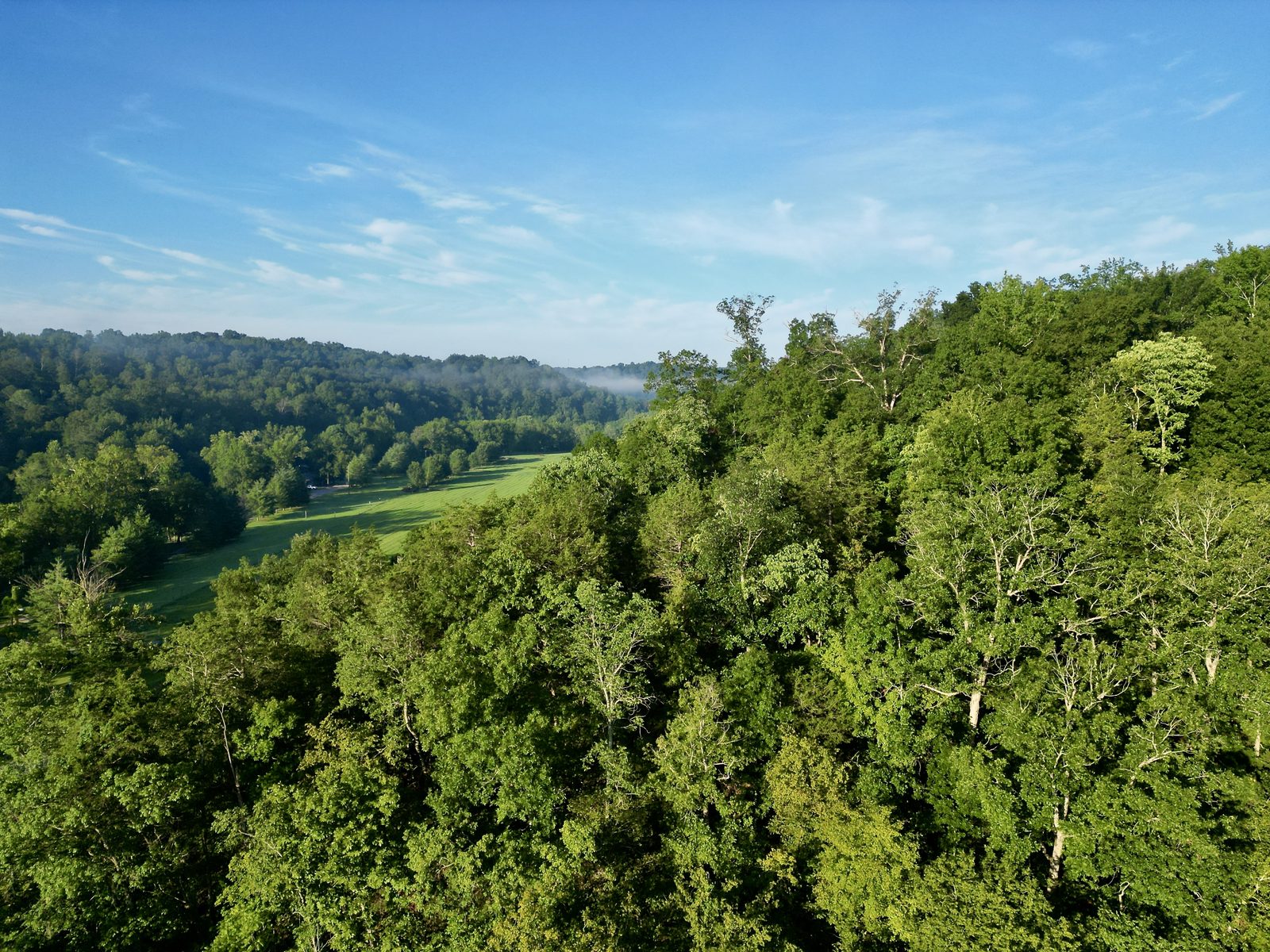
In Wilson County, Tennessee, the gentle undulations of the Central Basin invite thoughtful land stewards to envision farms nestled between cedar glade openings and limestone ridges rising toward the Highland Rim. Elevations span 440 to 1,319 feet, cradling the Cumberland River's Old Hickory Lake reaches and Stones River tributaries that carve fertile bottomlands amid silt loam soils like Mountview and Egam—well-drained profiles ideal for hay meadows, pasture rotations, and scattered hardwoods. Here, 25% cropland shares space with 30% lush pasture and 25% forested tracts, where rocky outcrops in Cedars of Lebanon State Park hint at karst hydrology sustaining springs and wildlife corridors. This mosaic terrain, roughly 571 square miles of balanced rural character, offers recreational retreats with enduring agricultural promise, far from urban sprawl yet proximate to Nashville's pulse.

Wilson County — Quick Facts

Physiographic Region
Interior Low Plateaus — Central Basin (Nashville Basin)
Elevation Range
440–1,319 ft above sea level
Area
571 sq mi · County seat: Lebanon
Dominant Landforms
Wilson County lies primarily in the Central Basin physiographic region with characteristic cedar glades and thin limestone-derived soils supporting unique prairie-like openings amid rolling uplands. Near its eastern edge, terrain transitions to the Highland Rim escarpment with steeper ridges and rocky outcrops evident in Cedars of Lebanon State Park. River valleys along the Cumberland and Stones drain the area, offering floodplains for bottomland hardwoods, while dominant gentle to moderate slopes suit pasture and recreational tracts.
Major Waterways
Cumberland River (Old Hickory Lake), Stones River tributaries, Ackers Lake
Dominant Soils
Mountview, Egam, Bodine, Inman silt loams (well to moderately well drained silt loams suited for pasture, hay, and hardwood; some cherty phases on slopes)
Land Use
25% cropland / 30% pasture / 25% forested / 15% developed (per USDA NASS Ag Census farm data & county estimates)
Jump to Section
Section 01

Minimum Lot Sizes & Zoning Districts

Wilson County's A-1 (Agricultural) and R-1 (Rural Residential) districts apply a uniform 40,000 sq ft (~0.92 acres) minimum lot size across unincorporated areas — but Mt. Juliet and Lebanon each operate under separate municipal ordinances that can allow smaller lots where sewer infrastructure is available.

Verified Data
A-1 — Agricultural

Agricultural District

The A-1 district is the primary rural zoning classification in unincorporated Wilson County, covering the majority of the county's agricultural land base. It is designed to preserve farming and forestry uses, protect open space and natural resources, and limit incompatible development in areas where crop production, animal husbandry, and large-tract rural activities are the norm. Minimum lot size under A-1 is 40,000 sq ft (~0.92 acres). The district is codified under the Wilson County Zoning Ordinance, with current standards effective as of 11/17/2025 per wilsoncountytn.gov. Most large farm tracts, cattle operations, and hay ground throughout the unincorporated county carry this designation.

Key Number40,000 sq ft (~0.92 acres) minimum · Source: wilsoncountytn.gov (codified 11/17/2025)
R-1 — Rural Residential

Rural Residential District

The R-1 district covers lower-density residential development in the unincorporated county — single-family homes on larger parcels removed from the urban growth boundaries of Mt. Juliet and Lebanon. R-1 shares the same 40,000 sq ft minimum lot size as A-1, establishing a consistent rural density threshold throughout the unincorporated county. Community facilities, public utilities, and limited agricultural activities are also permitted in the R-1 district. Properties in R-1 are generally in areas that have been platted or historically subdivided, but remain rural in character — smaller farms, residential acreage, and estate-scale properties that don't fit neatly in a purely agricultural classification.

Key Number40,000 sq ft (~0.92 acres) minimum · Applies to unincorporated areas outside Mt. Juliet and Lebanon
Mt. Juliet Ordinance

Mt. Juliet Subdivision Standards

Mt. Juliet operates under its own municipal subdivision ordinance, separate from Wilson County's zoning resolution. Within the Mt. Juliet city limits and its urban growth boundary, lot sizes can be substantially smaller than the county's 40,000 sq ft standard — particularly in areas with access to municipal sewer, where subdivision density increases accordingly. The Mt. Juliet Planning Commission oversees development approvals. Buyers and developers looking at parcels within or adjacent to Mt. Juliet should pull municipal ordinances directly through the City of Mt. Juliet rather than relying on county zoning records — the two systems operate in parallel and a parcel's classification can change depending on annexation status.

Key FactSeparate municipal ordinance applies · Smaller lots possible with sewer · Verify annexation status
Lebanon Zoning

Lebanon Municipal Standards

Lebanon, the Wilson County seat, similarly maintains its own zoning and subdivision standards independent of the county ordinance. Lebanon's zoning code governs land within city limits and areas subject to Lebanon's planning jurisdiction. Development within Lebanon's planning area is reviewed by the City of Lebanon Planning Commission under Lebanon's own regulations. For buyers targeting land in or near the Lebanon city core — including new industrial parcels and commercial-adjacent residential ground — confirming whether a parcel falls under Lebanon municipal jurisdiction or county jurisdiction is an essential first step. The distinction affects permitted uses, minimum lot sizes, and what infrastructure must be in place before development can proceed.

Key FactLebanon has independent zoning code · Confirm jurisdictional status before any offer
Growth Pressure

Regulatory Outlook

Wilson County's planning commission is actively navigating one of the most significant growth cycles in the county's history. The rapid suburbanization of Mt. Juliet and the expanding Lebanon market have created sustained pressure to update the county's land use regulations — increasing residential density in growth corridors while protecting rural character in the agricultural interior. Buyers should be aware that zoning maps and ordinance language are subject to amendment as the county responds to these pressures. What is zoned A-1 today in a high-growth corridor may be subject to rezoning petition within the planning horizon of a typical land investment. Due diligence should always include a review of the county's adopted land use plan and any pending zoning amendments near the subject parcel.

Key FactCounty updating regulations in response to growth · Monitor comprehensive plan for zoning amendments
Subdivision Process

Platting & Lot Creation

Any division of land in Wilson County is subject to the county's subdivision regulations, administered by the Wilson County Planning Commission. A recorded plat is required before lots can be separately conveyed. The planning commission reviews all major subdivisions, and minor subdivisions (typically three or fewer lots) follow a streamlined administrative process. Lots created through the subdivision process must meet the minimum lot size requirements of the applicable zoning district — 40,000 sq ft for both A-1 and R-1 in unincorporated areas. For development plays, confirm the plat approval timeline with the planning office early — approval cycles in Wilson County have lengthened as staff and commission workload has increased with the growth surge.

Key FactPlat required for all lot divisions · Planning Commission review · Allow for extended approval timelines
Our Take

The 40,000 sq ft uniform minimum is straightforward on paper, but the practical reality in Wilson County is more nuanced. You have the county ordinance applying in unincorporated areas, Mt. Juliet operating under its own rules inside city limits, Lebanon doing the same, and a county planning commission actively revising the map in response to growth pressure. Before you write anything in Wilson County, you need to confirm which jurisdiction actually governs the parcel — county, Mt. Juliet, or Lebanon — and then confirm that the current zoning matches what you're expecting to be able to do with it. I've seen buyers get well into due diligence before they discovered the parcel they thought was county-zoned had been annexed into Mt. Juliet or was subject to a pending rezoning petition.

Section 02

Septic & Sewer

Sewer availability in Wilson County tracks the growth corridors closely — Mt. Juliet Water Authority and Lebanon's utility systems provide municipal sewer in the urban cores, while most rural acreage north, east, and south of Lebanon runs on individual septic systems governed by TDEC standards.

Verify Per Tract
TDEC Requirements

State Septic Standards

All wastewater systems in Tennessee are governed by the Tennessee Department of Environment and Conservation (TDEC) regardless of what county you're in. TDEC sets the standards for septic system design, permitting, and installation statewide. Minimum lot size for a septic permit is not set by the state — approval is based on a percolation test and soil evaluation specific to each parcel. TDEC's Division of Water Resources issues septic permits, and the Wilson County Health Department processes applications at the local level. Health department sign-off is required before a building permit is issued. On most rural Wilson County parcels, a conventional system requires 0.75 to 1.5 acres of workable soil — verify with a perc test before going under contract.

Key FactTDEC governs all septic permits statewide · Perc test essential before any rural purchase
Mt. Juliet Water Authority

Municipal Sewer — Mt. Juliet

Mt. Juliet Water Authority provides both water and sewer service within Mt. Juliet's service area. The rapid growth of Mt. Juliet has driven significant investment in utility infrastructure, and sewer service boundaries have expanded alongside residential and commercial development. Within the Mt. Juliet service area, sewer availability enables higher-density subdivision development that is not possible on septic-only ground. Buyers targeting parcels in or adjacent to Mt. Juliet should confirm current sewer service boundary maps through Mt. Juliet Water Authority directly — service areas have shifted substantially in recent years and online maps can lag actual infrastructure.

ProviderMt. Juliet Water Authority · Confirm service boundary before any development-intent purchase
Lebanon Utilities

Municipal Sewer — Lebanon

Lebanon's municipal utility systems serve the city core and surrounding growth areas. The City of Lebanon Water & Sewer Department manages sewer capacity for Lebanon's service territory. Lebanon has seen increasing industrial and retail development investment, which has in turn driven expansion of utility infrastructure to support new commercial activity. Sewer capacity along Lebanon's industrial corridors is generally more developed than in purely residential growth areas. For agricultural and rural parcels outside Lebanon's immediate service boundary — particularly north, east, and south of the city — individual septic is the standard, and the county's investment in rural water line extensions has not been matched by comparable sewer expansion.

ProviderLebanon Water & Sewer · Rural parcels outside city limits are on septic
Rural Infrastructure

Water Lines vs. Sewer Lag

Wilson County has made meaningful investment in rural water line extensions in recent years, improving public water access on many county roads that previously relied on private wells. However, sewer infrastructure has lagged significantly behind both water expansion and the pace of residential growth in the county. The practical result: many rural tracts now have access to public water for drinking and household use, but still require individual septic systems for wastewater treatment. This is an important distinction — having public water on the road does not mean sewer is available. Confirm each utility independently. On development plays, confirm sewer feasibility early; the cost of sewer extension can materially affect the economics of a subdivision or commercial project.

Key FactWater line access improved · Sewer lags behind growth · Confirm both independently per parcel
Our Take

The utility story in Wilson County is one of the most consequential variables for any land buyer. Mt. Juliet has sewer — that's why it has suburban pricing. Lebanon's core has sewer — that's why commercial and industrial ground near Lebanon trades at a premium. East of Lebanon, north of Lebanon, south toward Carthage Road — you're on septic, and the economics are fundamentally different. I always confirm the sewer service boundary before I run any comparable analysis on Wilson County land. A parcel just outside the sewer service line is worth a different number than a parcel inside it, even at identical acreage and comparable road frontage.

Section 03

Greenbelt Tax Assessment

Wilson County has strong agricultural roots — cattle operations, hay production, and some row crops are widespread in the unincorporated county — making greenbelt enrollment common on legitimate farm tracts. Timber ground in eastern Wilson County also qualifies. Three-year rollback taxes apply when agricultural use changes.

Active Ag County
State Law Minimums

Tennessee Greenbelt Requirements

Tennessee's Agricultural, Forest, and Open Space Land Act of 1976 provides significantly reduced property tax assessments for qualifying land. Under state law, the minimum acreage for open space qualification is 3 acres. Agricultural and forest land requires a minimum of 15 acres (or 10 acres if the owner has a qualifying tract in an adjacent county). Income test: average annual income of at least $1,500 over the prior three years from agricultural production — OR a documented 25-year farming history on the tract. Maximum enrollment is 1,500 acres per county per owner. Wilson County's greenbelt enrollment is administered by the Wilson County Property Assessor's office, and the 3-year rollback tax obligation triggers any time a qualifying parcel converts to a non-agricultural use.

State MinimumsOpen space: 3 acres · Ag/Forest: 15 acres · Income test: $1,500 avg/yr or 25-yr history
Wilson County Ag Character

What Qualifies Here

Wilson County has a genuine agricultural economy outside its suburban cores, with cattle operations and hay production being the dominant land uses across the unincorporated county. These are well-established, income-generating uses that easily satisfy the state income test and qualify for greenbelt enrollment. Some row crop production exists in flatter sections of the county. In eastern Wilson County, timber tracts — pine and hardwood — are increasingly common and qualify under the forest land provisions of the greenbelt statute. The combination of cattle, hay, and timber means that virtually any working farm tract in unincorporated Wilson County has a path to greenbelt enrollment if it hasn't already been enrolled.

Qualifying UsesCattle, hay, row crops, timber · Eastern county has notable timber tracts
Rollback Taxes

What Happens When Use Changes

When land enrolled in greenbelt is converted to a non-qualifying use — whether through sale for development, subdivision, residential construction on agricultural land, or cessation of farming activity — rollback taxes are assessed for the three most recent tax years at the full non-greenbelt assessed value. In Wilson County's current market, where land values have appreciated significantly near the Mt. Juliet and Lebanon corridors, rollback tax exposure on greenbelt-enrolled tracts can be a meaningful transaction cost. Always confirm greenbelt enrollment status and calculate rollback exposure before negotiating a purchase price. Rollback responsibility is a negotiable term in the contract — experienced buyers push for the seller to carry it or build it into price.

Key Fact3-year rollback on use change · Negotiate rollback responsibility explicitly in the contract
Greenbelt & Development

Greenbelt on Development Land

Many parcels along Wilson County's growth corridors are enrolled in greenbelt even as development pressure increases around them. This creates an important dynamic: a parcel may be priced as a development play while the seller continues to farm it (and thus maintain greenbelt status) until closing. Buyers planning to develop greenbelt-enrolled land should budget for the rollback tax obligation, confirm the current year's enrollment status with the assessor, and factor rollback into their total acquisition cost. In some cases, sellers are not fully aware of their rollback exposure and may be surprised at closing — which creates friction and negotiation complexity late in the transaction. Getting ahead of this in your offer is always the right call.

Key FactDevelopment land often still greenbelt-enrolled at time of sale · Confirm with assessor before offer
Our Take

Greenbelt is essentially standard on any legitimate working farm in Wilson County outside the Mt. Juliet and Lebanon city limits. When I'm reviewing a farm parcel in Wilson County, I assume greenbelt enrollment until I confirm otherwise — and then I calculate rollback exposure as part of the offer analysis. In the current market, three years of rollback on a tract that's appreciated near a growth corridor can be a five-figure number. That's not a deal-killer, but it is a negotiating point. The seller controls when they pull out of greenbelt by accepting an offer, and they'll be paying that rollback at closing whether they planned for it or not. Better to have that conversation upfront.

Wilson County Tennessee rural land and homesteads aerial view
Section 04

Zoning Districts & Special Provisions

A-1 Agricultural is the dominant classification in unincorporated Wilson County, with R-1 Rural Residential covering lower-density residential areas and commercial zoning concentrated along the US-70 and I-40 corridors. The planning commission is actively managing a tension between growth demand and rural character that is reshaping the county's zoning map in real time.

Codified 11/17/2025
A-1 — Agricultural

Agricultural District

A-1 is the foundational zoning classification in unincorporated Wilson County and covers the majority of the county's land area outside municipal boundaries. Permitted uses include crop farming, animal husbandry, dairying, forestry, and related rural activities, as well as single-family residences on qualifying lots. The 40,000 sq ft (~0.92 acres) minimum lot size applies throughout the A-1 district. A-1 zoning is designed to be protective of the rural landscape — it limits subdivision density, discourages commercial encroachment, and maintains the agricultural character of the county's interior. The current A-1 standards were codified as of 11/17/2025, per the Wilson County Zoning Ordinance available through wilsoncountytn.gov.

CoverageDominant district in unincorporated county · 40,000 sq ft minimum · Ag and single-family uses
R-1 — Rural Residential

Rural Residential District

R-1 Rural Residential covers single-family residential development in the unincorporated county at the same 40,000 sq ft minimum lot size as A-1. R-1 is typically found in areas that have transitioned from active agricultural use toward low-density residential occupancy — areas with platted subdivisions, older residential clusters, and estate-scale parcels that remain rural in character but are no longer primarily farmed. Community facilities and public utilities are also permitted in R-1. The district does not accommodate commercial or industrial activity, and its development parameters are designed to maintain the open, rural appearance of the landscape even as individual homesteads replace farm operations over time.

CoverageLow-density residential areas outside municipalities · 40,000 sq ft minimum
Commercial — US-70 & I-40

Commercial Zoning Corridors

Commercial zoning in Wilson County is concentrated along its primary growth corridors: US-70 (the old highway connecting Lebanon to Mt. Juliet and Nashville) and the I-40 corridor. These arterial routes carry the highest traffic volumes in the county and have historically been where commercial activity congregates. Retail, service, and mixed-use development cluster at interchange and exit areas. Lebanon's core commercial zone extends outward from the downtown square along US-70. The I-40 corridor commercial areas in and around Mt. Juliet have seen intensive development as the suburban build-out accelerated. Commercial-adjacent agricultural ground along these corridors is the highest-velocity land play in Wilson County — and is priced accordingly.

Key CorridorsUS-70 Lebanon to Mt. Juliet · I-40 interchange areas · Highest land velocity in the county
Planning Commission

Growth vs. Rural Character

The Wilson County Planning Commission is the central body managing the tension between development demand and the desire to preserve the county's rural identity. In practice, this means the commission is regularly fielding rezoning petitions from developers seeking to convert A-1 agricultural ground to higher-density residential or commercial classifications. The outcome of these petitions is not predictable — some succeed, some fail, and the county's comprehensive plan guidance shifts the odds in either direction depending on how the subject parcel is characterized in the land use map. Buyers acquiring agricultural ground with development intent need to conduct a full zoning entitlement risk assessment before closing. Never acquire Wilson County land on the assumption that a rezoning will be approved.

Key FactActive rezoning pressure throughout county · Do not assume rezoning approval without confirmed entitlement path
Our Take

Wilson County's zoning map is not static right now — it's a living document that the planning commission is revising in real time in response to unprecedented growth pressure. For buyers, that creates both opportunity and risk. The opportunity: agricultural ground adjacent to growth corridors that hasn't been rezoned yet can be acquired at farm prices before the market catches up to its development potential. The risk: a parcel that looks like a development play on a map may face rezoning opposition that your pro forma didn't account for. I always run a zoning entitlement analysis as part of due diligence on any Wilson County parcel with development intent. The A-1 designation is the default — getting off it requires a process, not just a purchase.

Section 05

Utilities & Infrastructure

Middle Tennessee Electric serves rural Wilson County, with municipal utilities covering Lebanon and Mt. Juliet. Water line access has improved significantly across the county's rural roads, but natural gas and high-speed internet thin out in eastern and northern Wilson. Remote parcels typically rely on well water and propane.

Verify Per Tract
Electric

Electric Service

Middle Tennessee Electric Membership Corporation (MTEMC) is the primary electric cooperative serving rural Wilson County. MTEMC distributes TVA power through a cooperative structure that covers the unincorporated county and many rural areas adjacent to municipal boundaries. Lebanon's municipal electric utility and Mt. Juliet's municipal systems serve their respective incorporated areas. Electric service is broadly available throughout Wilson County, including on most rural county roads. Extension costs to remote or off-road parcels can be significant, however — confirm service availability at the meter point of the subject parcel, not just the nearest road, when evaluating remote acreage for a homestead or farm build-out.

ProviderMiddle Tennessee Electric (MTEMC) · Municipal utilities in Lebanon and Mt. Juliet
Water

Public Water & Wells

Wilson County has invested meaningfully in rural water line extensions in recent years, and public water access has improved substantially along many county roads that previously required private wells. Several utility districts serve unincorporated areas. Within the suburban rings of Mt. Juliet and Lebanon, public water is generally available. In eastern and northern Wilson County — where agricultural character is more intact and development pressure has been lower — well water remains standard, and drilling depths in those areas typically range from 150 to 350 feet depending on local geology. Always confirm public water availability on any rural parcel through the applicable utility district before making infrastructure assumptions in your pro forma.

Key FactWater line access improved on many county roads · Eastern/northern county: well typical · Confirm before offer
Natural Gas

Gas Service

Natural gas service is available in Lebanon, Mt. Juliet, and along the primary growth corridors of the county. Gas infrastructure has been expanding along Wilson County's development corridors as new residential and commercial construction has driven demand for piped natural gas. Outside these corridors — particularly in eastern and northern Wilson County — natural gas is typically not available, and propane is the standard heating and cooking fuel on rural and agricultural parcels. Buyers planning significant structures on rural acreage should budget for propane infrastructure and plan accordingly. As growth corridors extend outward, gas availability will improve, but the rural interior of the county operates without it today.

Rural StandardPropane typical outside growth corridors · Gas expanding along I-40 and US-70 corridors
Broadband & Internet

Connectivity

Broadband coverage in Wilson County is reliable in the Mt. Juliet and Lebanon urban areas, where fiber and cable internet infrastructure is well established. Rural coverage is more variable — state and federal connectivity programs have improved broadband availability in portions of the county's rural road network, but gaps persist in eastern and northern Wilson County where population density is low enough that private providers have not invested in fiber infrastructure. Satellite internet (including Starlink) is an increasingly viable option for remote parcels. For any buyer whose work or lifestyle requires reliable high-speed internet on a rural parcel, confirming specific service availability at that address — not just the general area — before going under contract is essential.

Rural RealityFiber available in Mt. Juliet and Lebanon · Rural coverage variable · Verify broadband at address before contract
Our Take

The utility picture in Wilson County has improved materially over the last five years, particularly on water. Public water is now available on many rural roads where a buyer previously had no option but a private well. That change matters — it affects what you can subdivide, what a future buyer will pay, and what the county's minimum lot size regulations require. But sewer has not kept pace with water, and in eastern and northern Wilson County you're still planning around septic and well. The good news is that the rural infrastructure baseline is better than it was, and buyers who understand where the gaps are can price land accordingly.

Section 06

Sub-Areas & Key Corridors

Wilson County is not one market — it's four. Mt. Juliet is effectively a Nashville suburb with suburban land values to match. Lebanon is a growing small city with industrial momentum. Northern Wilson is agricultural and undervalued relative to comparable ground in adjacent counties. Eastern Wilson is the last genuinely undiscovered acreage within reasonable commute distance of downtown Nashville.

Know Your Area
Mt. Juliet Corridor

Nashville Suburban Premium

Mt. Juliet is functionally a suburb of Nashville, with direct I-40 access, strong school ratings, and a fully built-out commercial base along the Providence corridor and surrounding areas. It is consistently ranked among the fastest-growing cities in Tennessee, and that growth has absorbed most of the available raw acreage in and around the city limits. Utility infrastructure — water, sewer, natural gas — is fully built out in the Mt. Juliet service area. Land values here are at or near Nashville suburban levels: this is not where you find farm pricing. Buyers targeting Mt. Juliet should expect to compete at suburban Nashville price points for any developable parcel, and should understand that the inventory of raw agricultural ground within Mt. Juliet's reach is limited and thinning rapidly.

Market CharacterNashville suburb · Strong utilities · Highest land values in the county · Limited raw acreage
Lebanon & Surrounds

Industrial Investment & Growth

Lebanon, the county seat, is in the middle of a growth cycle driven by new industrial and retail investment. Several significant employers have located in or near Lebanon's industrial corridors, and retail development has followed the population growth. Land values in Lebanon and its immediate suburban ring have increased meaningfully as a result — this is no longer a buyers' market in the immediate Lebanon area. Moderate land values relative to Mt. Juliet still provide some value, but the differential is narrowing. Agricultural ground within Lebanon's urban growth boundary is particularly well-positioned as a development play, though rezoning risk is real and the planning commission's review process needs to be factored into any timeline. Lebanon offers more raw acreage inventory than Mt. Juliet, but that inventory is being absorbed.

Market CharacterIndustrial and retail investment · Moderate land values · Development land tightening
Northern Wilson

Agricultural Character & Value

Northern Wilson County — the areas north of Lebanon toward the Smith and Trousdale county lines — retains its agricultural character with cattle operations, hay ground, and lower development pressure than the I-40 corridor or the Lebanon city core. Land prices here reflect farming economics rather than suburban speculation, making this the best remaining value play for buyers who want genuine acreage in Wilson County without paying Mt. Juliet or Lebanon growth prices. The landscape is rolling and productive, with the kind of farm infrastructure — established fence lines, ponds, hay barns — that a genuine agricultural buyer or estate buyer wants to find. Drive times to downtown Nashville are longer from northern Wilson, but for buyers prioritizing land character over commute time, this sub-area is where Wilson County value still exists.

Market CharacterAgricultural character · Cattle and hay dominant · Lower development pressure · Best value play in the county
Eastern Wilson

Undiscovered Farm Country

Eastern Wilson County — the areas east of Lebanon toward the Cumberland County line — is the least discovered sub-area in the county and arguably the most compelling opportunity for buyers who want genuine farm land within reasonable reach of Nashville. The landscape shifts to rolling hills with more timber and creek-bottom ground than the flatter agricultural plains closer to Lebanon. Buyer interest is increasing as more Nashville-area buyers discover that you can be 45 minutes from downtown Nashville with agricultural character, meaningful acreage, and pricing that still reflects rural rather than suburban land economics. Eastern Wilson offers the combination of accessibility and value that is increasingly rare within 50 miles of a major city. The window is open now — the question is whether it stays open as more buyers find it.

Market Character~45 min from downtown Nashville · Genuine farm country · Increasing buyer interest · Value window still open
Our Take

The sub-area breakdown in Wilson County tells you everything about where the opportunity is. Mt. Juliet is done — it's a suburb and it prices like one. Lebanon is well on its way. Northern Wilson is good value but it requires patience with drive time. Eastern Wilson is where I'm telling buyers to look right now. It's 45 minutes from Nashville, it has legitimate farm character, it's not picked over, and it hasn't repriced to match what similar ground sells for in counties with more buyer awareness. That changes. It always changes. The buyers who find eastern Wilson County in the next 12 to 18 months are going to look very smart in five years.

Section 07

Market Overview & Buyer Considerations

Wilson County's land market has bifurcated sharply along the I-40 corridor — Mt. Juliet and Lebanon have repriced significantly with Nashville's suburban expansion and industrial growth, while northern and eastern Wilson County still offer genuine farm value within 45 minutes of downtown Nashville at a fraction of comparable prices in closer-in counties.

Active Market
Pricing

Price Per Acre Ranges

Wilson County land values range broadly by sub-area and use type. The overall range for vacant agricultural and residential land runs from approximately $12,000 to $75,000 per acre, with the extremes driven by sub-area position and development potential. Mt. Juliet corridor land — particularly parcels with sewer access, I-40 proximity, or development entitlement — trades at the upper end of this range and can exceed it for premium development sites. Lebanon and its immediate surrounds trade at moderate levels with appreciation continuing. Northern and eastern Wilson County agricultural ground remains closer to the lower range, reflecting farm economics that have not yet fully absorbed the appreciation pressure spreading from the county's growth cores.

Price Range$12,000–$75,000 per acre · Sub-area and development potential drive the spread
Growth Drivers

What's Moving the Market

Three forces are driving Wilson County land values. First: Nashville's suburban expansion along the I-40 corridor, which has made Mt. Juliet effectively the eastern frontier of the Nashville metro and driven residential demand that has absorbed available parcels rapidly. Second: Lebanon's industrial and retail investment cycle, which has improved Lebanon's commercial fundamentals and driven land demand for industrial-proximate and commercial-adjacent parcels. Third: spillover from overheated adjacent markets — buyers who get priced out of Williamson and Davidson counties look east and find Wilson County. That spillover effect is already operating, and it's compressing the timeline for eastern Wilson County to reprice. The I-40 corridor has repriced; the value is now in northern and eastern Wilson.

Key DriversNashville suburban expansion · Lebanon industrial investment · Spillover from priced-out adjacent counties
Buyer Profile

Who's Buying Here

The Wilson County land market attracts several distinct buyer types. Nashville suburban buyers and residential developers compete for parcels within Mt. Juliet's reach — this is the most competitive segment of the market and includes institutional capital. Industrial and commercial land buyers are active near Lebanon's growth corridors. Estate and lifestyle buyers are targeting northern Wilson County for farms with privacy, good agricultural infrastructure, and reasonable prices. A growing segment of Nashville-market buyers who have been priced out of Williamson and Davidson counties are discovering eastern Wilson as the last place to find meaningful acreage within commutable distance of the city at non-Nashville prices. That buyer profile is the most interesting trend in the Wilson County market right now.

Most ActiveSuburban developers near Mt. Juliet · Industrial buyers near Lebanon · Lifestyle/farm buyers in northern and eastern county
Market Timing

Where the Opportunity Is Now

The optimal window for buying Wilson County land at value pricing is narrowing, but has not closed. The I-40 corridor — Mt. Juliet and the Lebanon commercial core — has already repriced to reflect Nashville-area demand. But northern Wilson County agricultural ground, and especially eastern Wilson County, still trades at prices that reflect farming economics rather than suburban speculation. The displacement effect from priced-out Nashville markets continues to press buyers outward, and eastern Wilson County is the next area in the path of that pressure. Buyers who understand the trajectory and act before that repricing is fully reflected in the market will benefit. The window that buyers in Mt. Juliet enjoyed five years ago exists today in eastern Wilson County — and the 45-minute drive from downtown Nashville makes the timeline for that repricing shorter than many buyers assume.

OpportunityNorthern and eastern Wilson undervalued relative to comparable ground · Act before displacement pricing reaches these areas
Our Take

"Wilson County offers one of the best combinations of accessibility and value right now. Mt. Juliet is essentially a suburb of Nashville, and Lebanon is following. For buyers who want a genuine farm or estate within 45 minutes of downtown Nashville, eastern Wilson County is where I'm looking. The I-40 corridor has repriced — the value is in the northern and eastern parts of the county where you still get agricultural character at reasonable numbers."


Related Resources

For a complete overview of land buying in Middle Tennessee, start with our Land Buyer's Guide — it covers financing, due diligence, and how to evaluate any county in the region. We serve adjacent markets including Sumner County (northern reach toward Gallatin and Portland) and Rutherford County (southeastern growth corridor toward Murfreesboro). Ready to discuss a specific Wilson County parcel? Contact Ross or Matt directly — we know the sellers, the off-market inventory, and the zoning issues that don't show up in public records searches.


We regularly represent land in Wilson County. View our current listings or contact us about off-market opportunities in the county.

Neighboring County Guides

Comparing options? Explore our guides for neighboring counties: Davidson County, Rutherford County, Sumner County. Or see all eight counties in our complete buyer's guide.

Ready to Find the Right Land?

Tell us what you're looking for. We know these counties, the sellers, and the deals that aren't on the MLS. Let's talk.

Your information is never shared or sold. We'll respond within one business day.

Thank you — we'll be in touch within one business day.
Scenic Land & Farms  ·  Zeitlin Sotheby's International Realty

Market Intelligence

See what the data says about Wilson County.

Active listings, sold prices, days on market, and trends — updated weekly in our free Land Intelligence tool.

Explore Wilson County Data →