Zeitlin Sotheby's International Realty  ·  615.383.0183  ·  Each office is independently owned and operated.
Middle Tennessee Land Guide

Sumner County Land for Sale — Buyer's Guide

Live Market Data · Scenic Land Intelligence Explore live →

Sumner County — Closed Transaction Data

Based on verified closed land transactions in Sumner County. Pulled live from the Scenic Land Intelligence database — updates automatically as new closings are recorded.

Median $/Acre
Typical Range (P25–P75)
Median Tract Size
Median Days on Market
Closed Transactions

Live data — pulled at page load from the Scenic Land Intelligence transaction database. Median $/acre is the midpoint of all qualified closings (tracts 1+ acres); P25–P75 is the typical range (middle 50%). Outliers above $5M/acre and below $100/acre excluded.

Sumner County sits north of Nashville along the I-65 and US-31E corridors. Anchored by Gallatin and bordered by Old Hickory Lake, this county offers a mix of suburban growth and genuine agricultural character. The AR (Agricultural Reserve) district with its 15-acre minimum controls large tracts, while growth pressure from Hendersonville and Gallatin pushes land values higher each year.

Everything in this guide is drawn from Sumner County's published zoning resolution and our firsthand transaction data. Use it as a working reference — and contact us when you're ready to talk specifics.

← Back to All County Guides
Terrain at a Glance

What the land itself is telling you.

In Sumner County, Tennessee, the land divides neatly along an east–west escarpment: to the north, the Eastern Highland Rim's dissected cherty-limestone plateau rises to 1,056 feet, carved into finger ridges and narrow rocky creek valleys with scattered karst sinkholes; to the south, the Outer Nashville Basin rolls gently at 450–700 feet across fertile, high-cultivation farmland that meets the Cumberland River's broad alluvial floodplains. Old Hickory Lake, a 22,500-acre USACE reservoir, anchors the county's southern boundary, while Drake's Creek, the Red River headwaters, and Bledsoe's Creek thread through the uplands. Deep, well-drained Baxter, Dickson, Bewleyville, and Mountview silt loams dominate the Highland Rim, giving way to productive Armour and Arrington series in the basin valleys — supporting 50% cropland, 26% pasture, and 19% woodland across the county's 140,000 acres of farmland.

Sumner County — Quick Facts

Physiographic Region
Interior Low Plateaus — Eastern Highland Rim and Outer Nashville Basin
Elevation Range
387–1,056 ft above sea level
Area
543 sq mi · County seat: Gallatin
Dominant Landforms
Sumner County spans the transition from the Eastern Highland Rim's dissected cherty-limestone plateau — finger ridges, narrow rocky creek valleys, and karst sinkholes — to the rolling Outer Nashville Basin's fertile cultivated lowlands. The Cumberland River bluffs and Old Hickory Lake's broad alluvial floodplains define the southern boundary, while the northern uplands feature moderate relief with 200–300 foot elevation changes from ridgetop to creek bottom.
Major Waterways
Cumberland River, Old Hickory Lake (22,500 acres), Drake's Creek, Red River, Bledsoe's Creek, Mansker's Creek, Big Trammel Creek
Dominant Soils
Baxter, Dickson (TN state soil), Bewleyville, Mountview silt loams on Highland Rim; Armour and Arrington series in basin valleys; well-drained profiles on limestone residuum and loess
Land Use
50% cropland, 26% pasture, 19% woodland, 5% other (on farmland; ~140,142 total farm acres per 2022 USDA Ag Census)
Jump to Section
Section 01

Minimum Lot Sizes & Zoning Districts

The AR (Agricultural Reserve) district controls large unincorporated parcels with a firm 15-acre minimum, while RR (Rural Residential) governs most of the suburban-edge development at 40,000 sq ft — though that RR minimum jumps to 5 acres if public water is unavailable.

Verified Data
AR — Agricultural Reserve

Agricultural Reserve District

The AR district is designed for the growing of crops, animal husbandry, dairying, forestry and related rural activities. It may also include lands not suited by reason of soil, geologic, or topographic limitations for development. AR is applied at the property owner's request in any character area of the comprehensive plan where the property is at least 15 acres. Minimum lot area is 653,400 sq ft (15 acres). Minimum lot width is 200 ft for residential uses and 300 ft for other uses. Maximum building height is 35 ft. Maximum lot coverage is 20% for residential uses.

Key Number653,400 sq ft (15 acres) minimum · 200 ft minimum lot width (residential)
RR — Rural Residential

Rural Residential District

The RR district is designed for low density residential development with an open appearance, consisting of single family detached dwellings and accessory structures. It also includes community facilities, public utilities, and agricultural activities. Minimum lot area is 40,000 sq ft. However, if public water service is not available or does not meet minimum requirements as determined by the water provider, lot sizes may not be less than 5 acres (217,800 sq ft). Minimum lot width is 100 ft for residential and 150 ft for other uses.

Key Number40,000 sq ft standard minimum · 5 acres (217,800 sq ft) if no public water
SR — Suburban Residential

Suburban Residential District

The SR district is designed for medium density residential development where sufficient urban-type services and facilities are provided or can be facilitated prior to development. Minimum lot area is 20,000 sq ft for residential uses and 40,000 sq ft for other uses. Minimum lot width is 75 ft for residential and 150 ft for other uses. This district is applied in suburban and high growth character areas per the comprehensive plan. Maximum lot coverage is 25% for residential uses.

Key Number20,000 sq ft residential minimum · 40,000 sq ft for other uses
MHC — Mobile Home Community

Mobile/Manufactured Home Community District

The MHC district provides a planned environment for individual mobile or manufactured homes. Minimum development size is 5 acres with a maximum density of 7 dwelling units per acre. Individual mobile home spaces may not be smaller than 4,000 sq ft. Peripheral yards are required at 75 ft front, 50 ft side, and 50 ft rear. Public sewer is required — no individual septic tanks are allowed in MHC developments.

Key Number5 acres minimum development · 7 DU/acre maximum · 4,000 sq ft minimum space
PUD — Planned Unit Development

Planned Unit Development District

PUDs allow flexibility from standard bulk regulations through a multi-step county review process including Planning Commission recommendation and Board of Commissioners approval. Residential PUDs are classified as Low Density (2.2 DU/acre, single family only), Medium Density (3.5 DU/acre, single family only), or High Density (4.0 DU/acre single family, 8 DU/acre townhouse, 10 DU/acre multifamily). All PUDs must set aside a minimum of 20% of gross project area as open space.

Key FactBoard of Commissioners approval required · 20% open space minimum for all PUDs
Subdivision Rules

Platting & Subdivision Process

All subdivision of land within the Sumner County Planning Region is governed by the Sumner County Subdivision Regulations, separate from but complementary to the Zoning Resolution. Cluster Residential Developments may vary from standard bulk, yard, and density requirements through an application process reviewed by the Planning Commission under Chapter 14 of the Zoning Resolution. All minimum lot sizes are contingent on the lot meeting Tennessee state requirements for wastewater treatment.

Key FactCluster subdivisions available in designated districts · TDEC septic approval required for all lots
Our Take

The 15-acre AR minimum is the gate that defines the true farm market in Sumner County. If you're buying less than 15 acres, you're in the RR or SR world — a different buyer profile, different financing, different exit. The RR water carve-out matters too: plenty of northern Sumner tracts don't have public water, which means your 40,000 sq ft lot is actually a 5-acre lot under the ordinance. Verify public water availability before you write anything — I've seen buyers get surprised on this late in due diligence.

Section 02

Septic & Sewer

Sewer availability in Sumner County follows the growth corridors tightly — Hendersonville, Gallatin, and immediate suburban rings have municipal sewer, while the northern half of the county runs on septic and the RR zoning ordinance explicitly increases minimum lot sizes when public water is absent.

Mixed Infrastructure
TDEC Requirements

State Septic Standards

All counties defer to the Tennessee Department of Environment and Conservation (TDEC) for septic system approval. Minimum lot size is not set by the state — approval is based on soil conditions determined by a perc test. Health department approval is required before building permits are issued. Typical minimum: 0.75–1.5 acres for a conventional system, but varies by soil type. The Sumner County Zoning Resolution explicitly states that depicted minimum lot sizes are dependent upon the lot meeting the requirements of the State of Tennessee for wastewater treatment.

Key FactPerc test required before any rural purchase · Health dept approval before building permit
Municipal Sewer

Where Sewer Is Available

Sewer service is concentrated in incorporated municipalities and their immediate service areas: Hendersonville, Gallatin, Portland, Millersville, White House, and Westmoreland each have municipal sewer systems. The Gallatin industrial corridor has driven sewer extension in that area. Outside these municipal service areas, the county is predominantly on septic. The zoning resolution requires that MHC (Mobile Home Community) developments connect to public sewer — individual septic tanks are expressly prohibited in MHC districts.

Key FactSewer limited to municipal service areas · Rural unincorporated county is on septic
Soil Conditions

Perc & Septic Considerations

Sumner County has varied soils. The county's limestone-based geology in central and eastern areas can create karst features and shallow rock conditions that complicate septic installation and reduce lot yield on smaller tracts. Agricultural soils in the northern county — the dark tobacco ground around Portland and Westmoreland — tend to perc better due to deeper, loamier profiles. Always run a perc test prior to contract on any rural parcel. The RR ordinance's 5-acre minimum in the absence of public water is effectively the county's acknowledgment that septic-only lots need more land.

Key FactLimestone karst in central county can create perc challenges · Northern farm soils generally more favorable
Our Take

In Sumner, sewer access is essentially a proxy for suburban pricing. If a parcel has municipal sewer, you're paying suburban Nashville land prices — full stop. Rural tracts on septic in northern Sumner are where genuine farm-and-estate value exists. The most important due diligence step on any rural Sumner buy: confirm public water availability, get a perc test, and understand that the 40,000 sq ft RR minimum flips to 5 acres the moment public water isn't on that road.

Section 03

Greenbelt Tax Assessment

Greenbelt enrollment is widespread on legitimate farm tracts throughout Sumner County, particularly in the northern agricultural areas where hay, cattle, and dark-fired tobacco operations have held land in qualifying use for generations.

Active Ag County
State Law Minimums

Tennessee Greenbelt Requirements

Under Tennessee's Agricultural, Forest, and Open Space Land Act of 1976, qualifying land receives significantly reduced property tax assessments. Agricultural land: 15-acre minimum (or 10 acres if the owner has another qualifying tract). Forest land: 15 acres. Open space: 3 acres. Income test: $1,500 average annual income over 3 years, or a 25-year farming history. Maximum: 1,500 acres per county per owner. The 15-acre AR district minimum in Sumner County aligns precisely with the state Greenbelt agricultural threshold — not a coincidence.

State MinimumsAg/Forest: 15 acres · Open space: 3 acres · Rollback: 3 years of back taxes on use change
Sumner County Specifics

How Greenbelt Is Applied Here

Greenbelt is actively maintained on farm tracts throughout unincorporated Sumner County. The dominant qualifying uses are hay production, cattle grazing, and historically dark-fired tobacco — practices well established enough to satisfy the income test. Matt Lawson, our partner, lives on a farm in Gallatin and has direct experience with Sumner County Greenbelt enrollment. The Sumner County Assessor's office is the point of contact for enrollment, and the county is on a 5-year reappraisal cycle with the next reappraisal scheduled for 2029.

Key FactHay, cattle, and tobacco operations widely enrolled · 5-year reappraisal cycle through 2029
Rollback Taxes

What Happens When Use Changes

When land enrolled in Greenbelt is converted to a non-qualifying use — sold for development, subdivided, or no longer used agriculturally — rollback taxes are assessed for the 3 most recent tax years at the full assessed value. Factor this into any negotiation on agricultural land. Buyers taking over Greenbelt land should confirm current enrollment status and plan for rollback exposure if development is intended. In Sumner County's current market, rollback figures can be material on larger tracts given years of appreciation in assessed values.

Key Fact3-year rollback · Negotiate rollback responsibility in the contract
Our Take

Greenbelt is essentially universal on legitimate farm tracts in northern Sumner — it's not a question of whether a tract is enrolled, it's a question of how long it's been enrolled and what the rollback exposure is. At current land values, 3 years of rollback taxes can represent real money. I always confirm Greenbelt status and calculate rollback exposure before we go under contract — it's a negotiating point, and sellers sometimes aren't aware of what they'll owe at closing if they haven't done a development deal before.

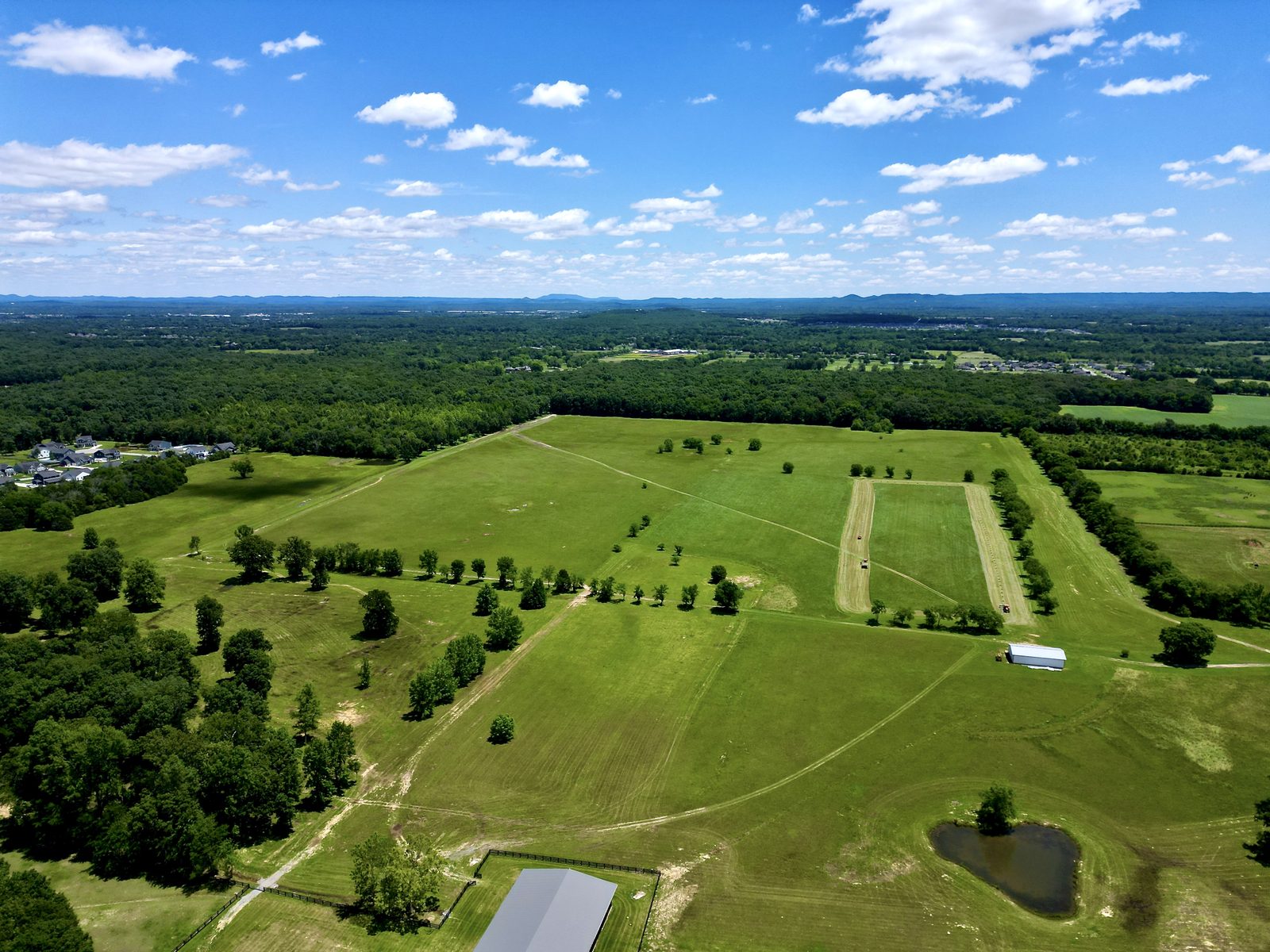
Sumner County Tennessee estate land and horse farms aerial
Section 04

Zoning Districts & Special Provisions

The Sumner County Zoning Resolution (effective June 26, 2023) establishes a structured set of residential, commercial, and industrial districts, with the AR and RR districts covering the vast majority of unincorporated land and commercial activity concentrated in municipal corridors.

2023 Resolution
AR — Agricultural Reserve

Agricultural Reserve District

The county's large-tract rural district. Designed for crops, animal husbandry, dairying, forestry, and related activities, as well as lands not suited for development due to soil, geologic, or topographic limitations. Community facilities and major recreational facilities requiring large land areas are also appropriate here. Applied at property owner's request on tracts of 15 acres or more in any comprehensive plan character area. The 15-acre minimum is consistent with state Greenbelt law.

CoverageCovers large unincorporated rural parcels throughout the county
RR — Rural Residential

Rural Residential District

Designed for low density residential development characterized by open appearance. Single family detached dwellings, accessory structures, community facilities, public utilities, and agricultural activities are all permitted. Applied in rural and suburban character areas per the comprehensive plan. Standard minimum is 40,000 sq ft, escalating to 5 acres where public water is unavailable. This is the dominant district for suburban-edge properties around Hendersonville, Gallatin, and Portland.

CoverageDominant district in suburban-edge and rural unincorporated areas
SR — Suburban Residential

Suburban Residential District

Medium density residential development where urban-type services are available or can be facilitated prior to development. Primarily single family detached, with community facilities, utilities, and agricultural activities also permitted. Applied in suburban and high growth character areas. Minimum lot is 20,000 sq ft (residential) or 40,000 sq ft (other uses). Sidewalks are required for all uses in the SR district, and all utilities must be underground on newly constructed neighborhood streets.

CoverageSuburban growth areas near municipalities where urban services exist
CN / CS / CG

Commercial Districts

Three commercial tiers: CN (Commercial Neighborhood, 15,000 sq ft minimum) for smaller-scale retail near residential areas; CS (Commercial Service, 20,000 sq ft) for a wide range of retail and consumer services; and CG (Commercial General, 25,000 sq ft, 45 ft max height) for the most intensive commercial activities including automotive sales, entertainment, warehousing, and limited assembly. Commercial development is concentrated along US-31E, US-31W, Long Hollow Pike, and within municipality corridors.

Key CorridorsUS-31E (Hendersonville), US-31W (Gallatin), Long Hollow Pike corridor
LI / HI

Industrial Districts

LI (Light Industrial, 40,000 sq ft minimum) requires all operations within enclosed buildings. HI (Heavy Industrial, 80,000 sq ft minimum, 50 ft max height) accommodates manufacturing with significant external effects or hazardous materials involvement. Industrial zoning is concentrated in the Gallatin industrial park area and select corridors near the county seat. The Gallatin industrial park has been a major growth driver — this is where industrial land demand is highest in the county.

Key LocationGallatin Industrial Park area · LI: 40,000 sq ft min · HI: 80,000 sq ft min
OP / IN

Office & Institutional Districts

OP (Office Professional, 20,000 sq ft minimum) provides for low-intensity office development and compatible commercial uses, and may serve as a transitional zone between residential and commercial areas. IN (Institutional, 1 acre minimum) accommodates governmental, community assembly, recreational, and institutional uses where a separate zoning district is appropriate. Both require underground utility connections and sidewalk provisions.

Key FactOP: 20,000 sq ft min · IN: 1 acre min · Both require underground utilities
Our Take

The Sumner County zoning code was completely rewritten and modernized — the 2023 resolution is significantly more structured and comprehensive than the old code. For buyers, the key thing to understand is that AR is the only district where you can acquire large contiguous agricultural ground with no neighbors at RR densities subdividing around you. If long-term land preservation matters, go AR. If you want more flexibility on smaller tracts closer to growth, RR with confirmed public water access is the move.
Section 05

Utilities & Infrastructure

Electric is widely available throughout Sumner County, public water reaches most suburban-edge areas, but natural gas and high-speed internet coverage thin out quickly north of Gallatin — buyers on rural tracts should plan for propane and verify broadband before committing.

Verify Per Tract
Electric

Electric Service

Middle Tennessee Electric Membership Corporation (MTEMC) is the primary electric cooperative serving unincorporated Sumner County. Municipal electric utilities serve incorporated areas including Gallatin Electric System and Hendersonville. TVA-sourced power through cooperative distribution means electric access is generally available on rural tracts throughout the county, though extension costs to remote parcels can be significant. The RR zoning district requires underground utility connections from the street curb or utility pole to the dwelling.

ProviderMiddle Tennessee Electric (MTEMC) · Municipal utilities in incorporated areas
Water

Public Water & Wells

Public water lines extend along most primary roads in the suburban rings around Hendersonville, Gallatin, White House, and Portland. Rural county roads — particularly in the northern county — may not have public water, which triggers the RR district's 5-acre minimum lot size requirement. Several utility districts serve unincorporated areas with public water. Buyers on rural tracts without public water should budget for well drilling; typical depths in Sumner County range from 200 to 400 feet depending on geology and location.

Key FactPublic water on most primary roads near municipalities · Well required in outer areas — verify before contract
Natural Gas & Internet

Gas, Broadband & Other

Natural gas service is available in incorporated municipalities and along select corridors, but is not consistently available throughout the rural county. Propane is the standard alternative for heating and cooking on rural and agricultural tracts. Broadband coverage is improving but uneven — fiber expansion has reached portions of the county through state connectivity programs, but gaps persist in northern Sumner around Westmoreland, Bethpage, and rural areas east and west of Portland. Confirm internet service availability specifically for any remote parcel before purchase if remote work capability matters.

Rural StandardPropane common outside municipal areas · Fiber expanding but gaps exist in northern county
Our Take

The utility variable that changes land value most in Sumner County is public water — specifically whether it's on the road. It's the difference between a 40,000 sq ft RR minimum and a 5-acre RR minimum, and that gap affects what you can do with the land and what it's worth to a future buyer. Before I run any comparable analysis on a Sumner parcel, I confirm public water. It's that fundamental to the valuation.

Section 06

Sub-Areas & Key Corridors

Sumner County's three distinct markets — suburban Hendersonville, growth-driven Gallatin, and rural northern Sumner — operate at completely different price points and serve entirely different buyer types, making sub-area awareness essential before you make any offer.

Know Your Area
Hendersonville / US-31E Corridor

Suburban Nashville Pricing

Hendersonville is functionally a Nashville suburb. Old Hickory Lake frontage commands significant premiums and will not soften — waterfront inventory is finite and buyer demand is persistent. Road frontage on US-31E and its surrounding neighborhoods is priced accordingly. Buyers expecting to find farm-priced land in this corridor will be disappointed; this market competes with Williamson County pricing on quality parcels. The Hendersonville sub-market is best suited for estate buyers, infill developers, and waterfront-specific buyers with suburban budgets.

Market CharacterOld Hickory Lake frontage premium niche · Suburban Nashville pricing throughout
Gallatin / US-31W Industrial Corridor

Industrial-Growth Driven

Gallatin is in the middle of an industrial growth cycle anchored by the Gallatin Industrial Park and associated logistics, manufacturing, and distribution activity along the US-31W corridor. This growth has repriced industrial-zoned and industrial-proximate land significantly. Residential land near Gallatin has followed industrial appreciation upward. Long Hollow Pike and the surrounding roads have seen subdivision pressure. Buyers targeting land near the industrial corridor should expect competition and should move quickly on well-located parcels.

Market CharacterIndustrial park driving land appreciation · Residential following industrial upward
Portland / Westmoreland / Northern County

Genuine Farm Value

Northern Sumner — roughly the Portland, Westmoreland, Bethpage, and Mitchellville areas — is where legitimate agricultural land remains available at prices that reflect farming economics rather than suburban speculation. This is dark-fired tobacco country transitioning to hay and cattle, with deep productive soils and established agricultural infrastructure. Drive times to Nashville are approximately 60 minutes but the character of the land is rural. This is the sub-area where greenbelt is nearly universal, acreage is meaningful, and patient buyers who aren't in a hurry to develop can find real value.

Market Character~60 min from downtown Nashville · Genuine farm ground at non-suburban pricing
Old Hickory Lake Frontage

Premium Waterfront Niche

Old Hickory Lake spans portions of both Sumner and Davidson counties, with Sumner County frontage concentrated in the Hendersonville and Gallatin areas. Waterfront inventory on Old Hickory is finite, demand is steady, and prices have not softened in any recent cycle. This is a fundamentally different buyer — recreational, lifestyle-driven, and largely price-insensitive to broader market corrections. Lakefront acreage in Sumner County rarely comes to market and trades at significant premiums over comparably sized interior tracts.

Market CharacterPremium niche that does not track broader rural market · Finite inventory
White House / I-65 Corridor

Growth Pressure Zone

White House sits at the Sumner-Robertson-Davidson county intersection along I-65, making it a growth pressure zone from multiple directions. Land near the White House interchange has repriced significantly as Nashville suburban growth marched up the I-65 corridor. This area is also influenced by Robertson County growth to the west. Buyers looking for development-play land in Sumner County will find the most active competition here, and patient sellers with interstate-proximate parcels have significant leverage in this environment.

Market CharacterI-65 access driving development pressure · Multi-directional growth convergence
Our Take

Northern Sumner around Portland and Westmoreland is the best value play in this county right now. You get genuine farm ground, good agricultural soils, Greenbelt as a baseline, and pricing that hasn't fully caught up to what comparably rural land trades for in Robertson or Wilson counties. The tradeoff is drive time — you're an hour from downtown. But for an estate buyer or a buyer who wants a working farm investment without paying Williamson County prices, northern Sumner is the move. Hendersonville and Gallatin are already priced; that's where sellers are winning, not buyers.

Section 07

Market Overview & Buyer Considerations

Sumner County land pricing has bifurcated sharply along the industrial growth and suburban Nashville lines, while northern agricultural ground still offers relative value — but that gap is closing as buyers figure out where the last affordable farm acreage is within an hour of Nashville.

Active Market
Pricing

Price Per Acre Ranges

Pricing in Sumner County ranges enormously by sub-area. Old Hickory Lake waterfront trades at significant premiums that are not directly comparable to inland ground. Suburban land in Hendersonville and near Gallatin competes with Williamson County pricing on quality parcels. Gallatin industrial-proximate land has appreciated sharply with industrial park activity. Northern county agricultural land — Portland, Westmoreland, Bethpage — still trades at farm economics, representing the county's best remaining value for genuine acreage buyers.

Price RangeNorthern farm ground at relatively accessible pricing · Suburban/waterfront at Nashville-equivalent levels
Growth Drivers

What's Moving the Market

Three forces are driving Sumner County land prices upward from different angles: industrial growth anchored by the Gallatin Industrial Park and its associated employer activity; Nashville suburban expansion pushing up the I-65 corridor through White House and along US-31E through Hendersonville; and Old Hickory Lake waterfront demand that operates independently of general market cycles. Northern county farm ground has benefited secondarily as buyers displaced from closer-in markets move further out in search of acreage at reasonable prices.

Key DriversGallatin industrial activity · Nashville suburban expansion · Old Hickory Lake demand
Buyer Profile

Who's Buying Here

The Sumner County land market serves several distinct buyer types simultaneously: Nashville suburban homebuyers and developers working near Hendersonville and Gallatin; industrial and logistics investors targeting parcels near the Gallatin industrial corridor; waterfront lifestyle buyers on Old Hickory Lake; and estate and agricultural buyers in northern Sumner who want genuine acreage at non-suburban prices. The most intense competition is currently in the industrial-proximate Gallatin market and the Hendersonville suburban market, where institutional and developer capital competes with individual buyers.

Most ActiveIndustrial buyers near Gallatin · Estate/farm buyers in northern county
Our Take

The Sumner County land opportunity right now is in the northern agricultural area — and the window is not indefinite. As buyers get priced out of Wilson and Robertson counties, they look at northern Sumner and find it. That displacement pricing effect is already happening. I'd rather be a buyer in Portland or Westmoreland today than in two years when more of that ground has repriced to match where the suburban tide is heading. Old Hickory Lake frontage is a permanent hold recommendation — that inventory doesn't come back once it sells.


Active Listings in Sumner County

View all current listings across Middle Tennessee.

Neighboring County Guides

Comparing options? Explore our guides for neighboring counties: Davidson County, Wilson County, Robertson County. Or see all eight counties in our complete buyer's guide.

Questions About Sumner County Land?

We know the sellers, the zoning, and the deals that aren't on the MLS. Tell us what you're looking for.

Your information is never shared or sold. We'll respond within one business day.

Thank you — we'll be in touch within one business day.
Scenic Land & Farms  ·  Zeitlin Sotheby's International Realty

Market Intelligence

See what the data says about Sumner County.

Active listings, sold prices, days on market, and trends — updated weekly in our free Land Intelligence tool.

Explore Sumner County Data →