Zeitlin Sotheby's International Realty  ·  615.383.0183  ·  Each office is independently owned and operated.
Middle Tennessee Land Guide

Williamson County Land for Sale — Buyer's Guide

Live Market Data · Scenic Land Intelligence Explore live →

Williamson County — Closed Transaction Data

Based on verified closed land transactions in Williamson County. Pulled live from the Scenic Land Intelligence database — updates automatically as new closings are recorded.

Median $/Acre
Typical Range (P25–P75)
Median Tract Size
Median Days on Market
Closed Transactions

Live data — pulled at page load from the Scenic Land Intelligence transaction database. Median $/acre is the midpoint of all qualified closings (tracts 1+ acres); P25–P75 is the typical range (middle 50%). Outliers above $5M/acre and below $100/acre excluded.

Williamson County is the most sought-after land market in Middle Tennessee. Anchored by Franklin and home to some of the highest per-acre values in the state, this county demands careful due diligence. This guide covers zoning districts, minimum lot sizes, septic and sewer access, Greenbelt tax exemptions, and where value still exists.

Everything here is sourced from Williamson County's published planning documents and verified against our direct transaction experience. Use it as a working guide — and contact us when you're ready to move.
← Back to All County Guides
Terrain at a Glance

What the land itself is telling you.

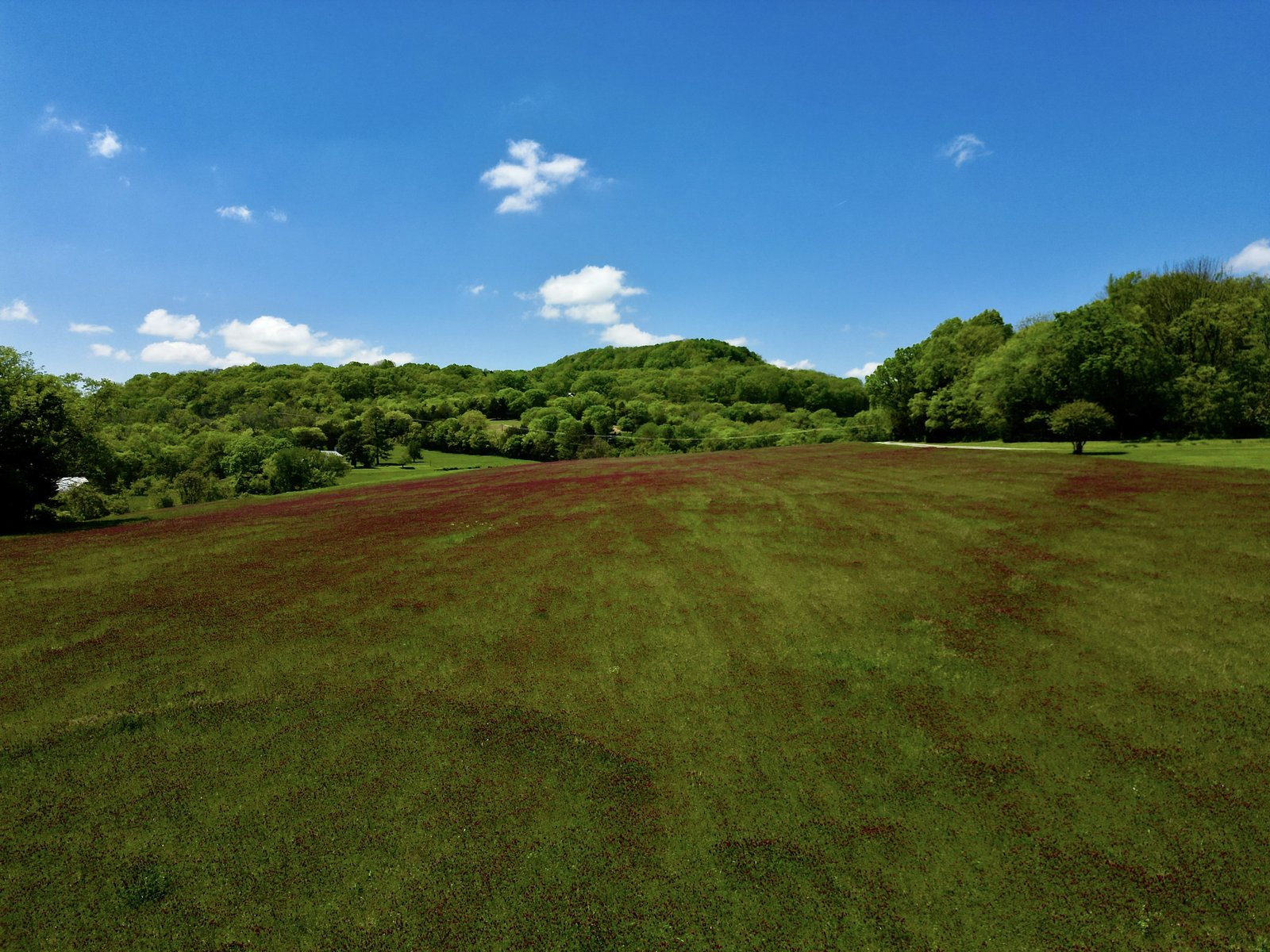
In Williamson County, Tennessee, the land unfolds across the heart of the Nashville Basin within the Interior Low Plateaus, where elevations range from 443 to over 1,100 feet, cradling gently rolling hills and fertile valleys. The terrain, shaped by Ordovician limestones on the Nashville Dome's flank, reveals subtle ridges, meandering river bottoms, and occasional karst sinks—perfect for the steward seeking pasture for horses, timber stands, or hunting grounds. Major waterways like the Harpeth River and its tributaries—the West Harpeth, South Harpeth, and Little Harpeth—thread through the county, nourishing silt loam soils such as Mountview, Bodine, and Dickson series, which drain well and support hay, livestock, and mixed farming. Amid 44% cropland, 31% pasture, and 21% woodland on remaining farms, these landscapes blend productivity with natural beauty, offering rural tracts where one can cultivate both crops and legacy in Tennessee's premier countryside.

Williamson County — Quick Facts

Physiographic Region
Interior Low Plateaus — Central Basin (Nashville Basin), western Highland Rim
Elevation Range
443–1,110 ft above sea level
Area
583 sq mi · County seat: Franklin
Dominant Landforms
Williamson County lies primarily in the gently rolling Central Basin physiographic region, with its western portion transitioning to the more rugged Highland Rim. The terrain features subtle ridges and broad river valleys carved by tributaries of the Harpeth River, with karst solution features in limestone formations and moderate slopes ideal for pasture and timber. Evocative of Tennessee's rolling horse country, the landscape offers scenic views and fertile bottomlands suited for rural estates and recreational tracts.
Major Waterways
Harpeth River, West Harpeth River, South Harpeth River, Little Harpeth River, Browns Creek, Overall Creek, Arrington Creek, Murfrees Fork
Dominant Soils
Mountview silt loam, Bodine silt loam, Dickson silt loam (assumed top series per regional Central Basin patterns); well-drained silt loams suited for pasture, hay, and hardwood timber production
Land Use
44% cropland / 31% pasture / 21% woodland / 5% other (on farms, per 2022 USDA Ag Census); significant developed land near urban areas
Jump to Section
Section 01

Minimum Lot Sizes & Zoning Districts

Williamson County's zoning ordinance (eff. January 1, 2013, updated through June 2025) establishes a tiered rural framework — from true agricultural land requiring 15-acre minimums down to conservation subdivisions that can achieve 1-acre lots while preserving open space.

Verified · Ord. 06-10-2025
A — Agricultural District

Agricultural District

The most restrictive and most rural base district. Designed to preserve the county's farming and open space character. Residential structures are permitted but lots must meet a 15-acre minimum. Primary agricultural uses — crop production, livestock, timber — are permitted by right. This district covers the bulk of unincorporated western and southern Williamson County.

Minimum Lot Size15 acres
RD-5 — Rural Development District 5

Rural Development District 5

The primary transitional district between agricultural land and suburban development. Traditional (non-conservation) subdivisions require a 5-acre minimum per lot. Conservation subdivision design reduces the minimum to 1 acre per lot in exchange for permanently preserved open space — a significant tool for developers seeking higher density while satisfying county design standards.

Minimum Lot Size5 acres (traditional) · 1 acre (conservation subdivision)
R — Rural District

Rural District

Intended for areas with existing rural character that are not primarily in agricultural production. Minimum lot size and permitted uses are more flexible than the A district but maintain a low-density rural character. Road frontage requirements and setbacks reinforce separation from suburban-pattern development. Typically found along rural road corridors.

CharacterLow-density rural · agricultural uses permitted · residential by right
E — Estate District

Estate District

Positioned between rural and suburban, the Estate District accommodates large-lot residential development in areas transitioning toward higher-end estate living. Minimum lot sizes are larger than suburban districts, maintaining visual open space while allowing residential development at a scale consistent with high-value estate homes on acreage.

CharacterLarge-lot residential · estate-scale development · open space maintained
RP-5 — Rural Preservation District 5

Rural Preservation District 5

The Rural Preservation District is the conservation-focused counterpart to RD-5. It applies in areas where rural character and open space preservation are the primary policy objective. Development is permitted but subject to stricter design requirements than RD-5, with a strong emphasis on maintaining the existing agricultural and scenic landscape.

FocusConservation-priority development · rural character retention
Conservation Subdivision · Article 12

Conservation Subdivision Design

Article 12 of the Williamson County Zoning Ordinance establishes a conservation subdivision pathway available in RD-5 and certain other districts. The mechanism allows 1-acre minimum lots when a significant portion of the tract is permanently set aside as open space through a conservation easement or homeowners' association-managed common area. Requires Planning Commission approval and a detailed open space management plan.

Key Number1-acre minimum lots · open space set-aside required · Planning Commission approval
Our Take

The A district 15-acre minimum is the single most important number in this county. If a tract is zoned A and you want to subdivide it — even into just two pieces — you need 30 acres minimum, plus road frontage and health department septic approval on each parcel. A lot of buyers don't realize that until they've already fallen in love with a 20-acre piece. RD-5 is where most of the development activity happens, and the conservation subdivision pathway at 1 acre per lot has produced some of the most attractive estate communities in the county. If you're looking at land over 50 acres in RD-5, the conservation subdivision math should always be part of the conversation about what you can do with it.

Section 02

Septic & Sewer

The sewer service boundary is the most important value driver in Williamson County land — tracts inside it can command a 3–5× premium over comparable rural land outside it. The vast majority of the county's rural acreage is on septic, governed by TDEC standards and the county's own Regulations Governing On-site Sewage Disposal Systems.

Sewer = Value Driver
TDEC State Requirements

On-Site Sewage Disposal — State Standards

All rural land in Williamson County is subject to Tennessee Department of Environment and Conservation (TDEC) septic standards. There is no fixed statewide minimum acreage for a septic system — approval is based on soil percolation testing, not acreage. A percolation (perc) test must be conducted and approved by the Williamson County Department of Sewage Disposal Management before building permits are issued. Health department approval is required at both the concept plan and final plat stages.

Key RequirementPerc test required · Health dept approval before building permit · Typical range: 0.75–1.5 acres for conventional system
Municipal & Utility District Sewer

Where Public Sewer Is Available

Public sewer in Williamson County is concentrated in and around Franklin, Brentwood, Spring Hill, Nolensville, and Fairview. The City of Franklin, Brentwood Utility District, and Tennessee American Water / Williamson County utility districts manage most of the service infrastructure. The sewer service area has been expanding steadily along major corridors — Mack Hatcher Parkway, US-431, US-31 South (Columbia Pike), and the Spring Hill/Thompson's Station growth corridor.

Key FactSewer availability concentrated in Franklin, Brentwood, Spring Hill, Nolensville & Fairview — confirm availability by GIS before contract
Williamson County Sewage Disposal Regulations

County-Level Septic Oversight

Williamson County operates its own Department of Sewage Disposal Management in addition to TDEC oversight. Section 3.05 of the Zoning Ordinance requires proof of proper wastewater treatment and disposal at every stage of the development review process — concept plan, preliminary plat, and final plat. For nontraditional systems (drip emitters, mound systems), Article 20 of the ordinance imposes additional design, bonding, and operations requirements beyond TDEC minimums.

Ordinance ReferenceZoning Ordinance §3.05 · Article 20 (Nontraditional Systems)
Soil Conditions & Perc Challenges

Karst, Clay & Difficult Soils

Williamson County sits on the Nashville Basin and its margins, which include significant karst (limestone) terrain — particularly in the eastern and southern portions of the county. Karst topography creates sinkholes, shallow rock, and drainage instability that can make conventional septic systems impossible or require expensive nontraditional alternatives. Article 13 of the Zoning Ordinance includes dedicated Karst Topography Protection Standards (Section 13.04) that regulate development in known karst areas. Buyers of rural tracts should conduct a full soils and karst investigation before committing to any development plan.

Watch ForKarst terrain in eastern/southern county · shallow rock · standard perc failures · Article 13.04 restrictions
Sewer Extension Process

Getting Sewer to a Rural Tract

Developers who want to extend sewer to a tract outside the current service area must negotiate with the applicable utility district or municipality and typically fund the extension themselves. The county's Zoning Ordinance (§3.05) requires proof of sewer availability — or an approved alternative — before development applications are accepted as complete. Timing and cost of extensions vary significantly by corridor and remaining capacity in trunk lines. An engineering study is required before any commitments are made.

ProcessUtility district negotiation required · developer-funded extension typical · engineering study needed
Nontraditional Wastewater Systems

Article 20 Alternative Systems

When conventional septic systems fail perc testing, Williamson County permits nontraditional wastewater treatment and disposal systems under Article 20 of the Zoning Ordinance. These include drip emitter systems, mound systems, and privately operated treatment facilities. Article 20 imposes detailed design development reports, soil investigation requirements, bonding, and ongoing operations oversight. The county requires an approved site plan before any residential development served by a nontraditional system proceeds.

Ordinance ReferenceZoning Ordinance Article 20 · Drip emitter standards §20.11
Our Take

Every buyer of rural Williamson County land should budget for a full perc test and a karst investigation before going under contract — or at minimum, make them contingencies with enough time to actually complete them. I've seen deals fall apart because the buyer assumed a 25-acre farm in eastern Williamson would perc fine, and it didn't. The sewer line question is equally critical. If a tract is outside the service area, get a real answer from the utility district about whether and when extension is possible before pricing development into your offer. Inside the service area, you're paying a significant premium — and it's usually worth it for development plays because sewer unlocks density that septic can't support.

Section 03

Greenbelt Tax Assessment

Tennessee's Agricultural, Forest, and Open Space Land Act — commonly called the Greenbelt Law — allows qualifying land in Williamson County to be assessed at its agricultural use value rather than market value, producing dramatic property tax savings on qualifying tracts.

State Law — TCA § 67-5-1001
Agricultural Land Qualification

Farm & Crop Land Greenbelt

Agricultural land qualifies for greenbelt assessment under Tennessee state law when it meets a minimum of 15 acres under agricultural use — or 10 acres if the owner has another qualifying tract in the same county. The land must demonstrate average annual income from agricultural activities of at least $1,500 over the preceding three years, or be certified by the state as having a 25-year history of agricultural production. In Williamson County, where farmland market values are exceptionally high, greenbelt tax savings on qualifying tracts can be substantial — often reducing tax liability by 80–95% compared to market-value assessment.

Minimum Acreage15 acres · (10 acres with qualifying second tract) · $1,500 annual income average required
Forest Land Qualification

Timber & Woodland Greenbelt

Forest land qualifies for greenbelt assessment at a minimum of 15 acres when it is managed under a documented forest management plan. The land must be primarily forested and managed with intent to produce forest products. In Williamson County, many larger rural tracts include both open agricultural fields and timber stands — both components can qualify together, as long as the overall tract meets the acreage threshold and use standards. Williamson County's timber ground is less common than in eastern counties, but mature hardwood stands on larger tracts still qualify routinely.

Minimum Acreage15 acres · Active forest management plan required
Open Space Land Qualification

Scenic & Open Space Greenbelt

Open space land has the lowest acreage threshold — just 3 acres — but requires that the land provide a public benefit through scenic beauty, natural character, or other open space values as recognized by the county assessor. Open space greenbelt is less commonly utilized in Williamson County than agricultural qualification, but it can apply to scenic viewshed land, stream corridors, and conservation-zoned parcels that don't meet the agricultural income test.

Minimum Acreage3 acres · Public scenic or open space benefit required · County assessor determination
Rollback Taxes

What Happens When Use Changes

When greenbelt-assessed land is converted to non-qualifying use — sold for development, subdivided, or taken out of agricultural production — the state requires payment of rollback taxes covering the most recent three tax years. The rollback is the difference between what was actually paid under greenbelt assessment and what would have been paid at full market value assessment. In Williamson County, where market values are high relative to agricultural use values, rollback tax liability can be significant and must be calculated and disclosed in any sale transaction involving greenbelt land.

Rollback Period3 most recent tax years · Buyer typically assumes unless negotiated otherwise
Maximum Greenbelt Acreage

Per-Owner County Cap

Tennessee law caps greenbelt qualification at 1,500 acres per owner per county. In Williamson County, this cap is rarely a practical constraint for individual buyers, but it becomes relevant for large-scale agricultural or conservation land assemblages. Owners with multiple tracts in Williamson County should track their total greenbelt acreage across all parcels to ensure they remain within the statutory cap and that each qualifying tract is properly enrolled with the county assessor.

Cap1,500 acres per owner per county · Multi-tract owners must track combined acreage
Application Process

Enrolling & Maintaining Greenbelt Status

Greenbelt enrollment applications are filed with the Williamson County Property Assessor's office. Applications must document qualifying use and acreage and are reviewed annually. Income documentation (Schedule F tax returns, farm income records) or a state certification of long-term agricultural history is typically required. Land that has changed hands recently may need to re-establish the qualifying income history under new ownership before greenbelt assessment is approved. Buyers acquiring greenbelt land should confirm enrollment will carry or plan for the gap in assessment during re-qualification.

ContactWilliamson County Property Assessor · Annual enrollment and review
Our Take

Greenbelt is nearly universal on properly managed farm tracts in Williamson County, and it's a significant holding-cost advantage. On a 50-acre tract with a $4M market value assessment, the difference between greenbelt and full-value property taxes can easily be $50,000 per year or more. When I'm representing buyers on larger agricultural tracts, I always verify whether the current greenbelt enrollment will transfer or needs to be re-established — and I make sure the rollback tax liability is calculated and clearly assigned in the contract before closing. Sellers sometimes try to treat rollback as a buyer's problem. It's negotiable, but you need to know the number going in.

Williamson County Tennessee rolling farmland and estate properties aerial view
Section 04

Zoning Districts & Special Provisions

Williamson County's 2013 Zoning Ordinance (updated through June 2025) replaced the former ordinance with a comprehensive framework of rural, residential, village, commercial, and mixed-use districts — each with specific use tables, dimensional standards, and review pathways that directly affect what you can build and how you can subdivide.

Article 10 · 23 Districts
Rural Districts Summary

A, R, E, RD-5, RP-5 Districts

Five rural base districts govern most unincorporated land. The A (Agricultural) district protects farm character with 15-acre minimums. The R (Rural) district accommodates existing rural character at lower densities. The E (Estate) district bridges rural and suburban. The RD-5 (Rural Development, 5-acre) is the primary development vehicle. The RP-5 (Rural Preservation, 5-acre) emphasizes conservation over density. District boundaries are set by the Official Zoning Map maintained by the Planning Director.

Governing DocumentZoning Ordinance §10.02 · Official Zoning Map
Village & Hamlet Districts

V, H, CC, CGV, LFV Districts

Williamson County maintains designated village and hamlet districts that protect specific historic community nodes. The Leiper's Fork Village (LFV) and College Grove Village (CGV) districts regulate development within those rural communities, preserving their character and limiting incompatible uses. The Crossroads Center (CC) district applies to rural commercial nodes. Hamlet (H) districts apply to small existing settlement areas. These districts have their own use tables and design standards distinct from the rural base districts.

Key AreasLeiper's Fork Village · College Grove Village · Crossroads Center nodes
MGA Districts — Municipal Growth Areas

MGA-5 & MGA-1 Transition Zones

Municipal Growth Area districts (MGA-5 and MGA-1) are transition zones that acknowledge future municipal annexation potential while maintaining interim rural or low-density standards. MGA-5 operates similarly to RD-5 in terms of minimum lot sizes, while MGA-1 anticipates eventual 1-acre or smaller development consistent with suburban municipal zoning. Land in MGA districts often carries development optionality as municipalities expand their service areas and annexation boundaries.

ImplicationMGA districts signal future annexation potential — confirm current regulations before purchase
Special Use Permits

Board of Zoning Appeals Review

Certain uses that aren't permitted by right in a given district may be approved as Special Uses by the Williamson County Board of Zoning Appeals (BZA) following a public hearing. Special use permit applications require documentation of compliance with use-specific standards in Section 11.03 of the Zoning Ordinance and must demonstrate compatibility with surrounding uses and the county's Comprehensive Land Use Plan. Common special uses in rural districts include event venues, agritourism operations, and certain commercial-scale agricultural processing facilities.

Review BodyBoard of Zoning Appeals · Public hearing required · §5.01
Resource Protection Overlays

Article 13 Environmental Standards

Article 13 of the Zoning Ordinance imposes resource protection standards that overlay all base zoning districts. These include waterway protection setbacks (§13.02), steep topography and slippage soil standards (§13.03), karst topography restrictions (§13.04), wetland buffers (§13.06), and woodland and tree protection standards (§13.07). On rural tracts with streams, slopes over 20%, known karst geology, or significant tree cover, these overlay standards can substantially constrain buildable area independent of the base zoning district.

Ordinance ReferenceArticle 13 · Applies over all base districts · Reduces net buildable area
Rezoning Process

Map Amendments — Article 4

Changing the zoning district classification of a parcel requires a Zoning Map Amendment reviewed by the Planning Commission (with recommendation) and decided by the County Commission (with public hearing). Pre-application conference with the Planning Director is mandatory. Standards for approval require consistency with the Williamson County Comprehensive Land Use Plan. Rezonings from A to RD-5 — the most common development-driven request — are evaluated against the Future Land Use Map and infrastructure capacity. Timing from application to County Commission decision typically runs four to six months.

Timeline4–6 months typical · Planning Commission recommendation · County Commission decision · Article 4
Our Take

The Williamson County zoning ordinance is sophisticated — it's not a simple table you can read in five minutes. The resource protection overlays in Article 13 are what most buyers miss. A tract can look like 40 developable acres on paper, but once you account for waterway buffers, slope restrictions, and karst setbacks, the net buildable footprint might be 20 acres or less. I always run the constraints before I advise a client on what a piece of land is actually worth. The rezoning process is also real — if you're buying A-zoned land with a plan to take it to RD-5, budget four to six months and real money for planning, engineering, and legal work. It's not automatic. Consistency with the Comprehensive Land Use Plan matters, and some areas of the county the commission actively doesn't want rezoned.

Section 05

Utilities & Infrastructure

Water, electric, gas, and broadband availability vary significantly across Williamson County — with urban-level service in Franklin and Brentwood giving way to wells and propane in the rural western and southern reaches. Infrastructure availability is a direct input into land value.

Verify Before Contract
Public Water

Water Availability & Providers

Public water in Williamson County is provided by multiple utility districts and municipalities, including the City of Franklin, Brentwood Utility District, Williamson County Utility District, and others. Coverage is well-established in urbanized areas and extends along major road corridors. Rural areas — particularly in the western county around Fairview and the southern county below Columbia Pike — have less utility district water coverage, and wells are common. Section 3.05 of the Zoning Ordinance requires proof of water availability at each stage of the development review process.

Rural AreasWells common west/south of Franklin · Confirm district coverage before contract · Zoning Ord. §3.05
Natural Gas

Piedmont / Tennessee Gas Distribution

Natural gas service in Williamson County is concentrated in the incorporated municipalities and their immediate surroundings — Franklin, Brentwood, Spring Hill, and Nolensville have natural gas distribution. Rural land outside these service areas typically relies on propane (LP gas) for heating, cooking, and hot water. For estate development on rural acreage, the absence of natural gas is a consideration but not a disqualifier — propane tanks are standard, and high-end estate homes in Williamson County regularly use propane without issue.

Rural AlternativePropane (LP) standard for rural tracts · Natural gas limited to municipalities and immediate surroundings
Electric Service

TVA / MLEC / Middle Tennessee Electric

Electric service throughout Williamson County is provided by Middle Tennessee Electric Membership Corporation (MTEMC) in most rural areas, with Nashville Electric Service (NES) serving portions of Brentwood and areas near the Davidson County line. TVA provides wholesale power. Electric service is generally available countywide — including to rural tracts — though service extension to a new homesite may require a connection fee and line extension cost that varies by distance from existing infrastructure. Confirm service provider and extension cost with the applicable co-op before finalizing a development pro forma.

ProvidersMTEMC (rural) · NES (northeast county) · Extension fees apply for new connections
Broadband & Fiber

Rural Internet Access

Broadband availability in Williamson County is strong in urbanized areas and increasingly available in rural corridors through fiber expansion. AT&T, Comcast/Xfinity, and several rural providers serve portions of the county. Truly rural tracts — particularly in western Williamson near the Hickman County line — may still rely on fixed wireless, satellite internet (Starlink is widely adopted), or cellular data. For buyers seeking to build estate homes on rural acreage, broadband access is increasingly a diligence item and should be verified by address or coordinates using the county's GIS mapping tools.

Rural OptionStarlink satellite widely adopted · Fiber expanding along major corridors · Verify by address
Road Access & Frontage

Public Road Frontage Requirements

Williamson County's Zoning Ordinance (Article 17) requires adequate road access for all new development. Minimum road frontage requirements apply by district — parcels without direct public road frontage must establish legal access easements meeting county standards. The county engineer reviews access for all development applications. Private roads and gated communities are permitted under Section 17.11–17.12 subject to design standards. Parcels accessed only by easement or private roads may face resale challenges and should be evaluated carefully for development potential and lender acceptability.

Ordinance ReferenceArticle 17 · County Engineer review · Private road standards §17.12
Flood Zones

FEMA Floodplain & Article 19 Compliance

Williamson County participates in the National Flood Insurance Program (NFIP), and Article 19 of the Zoning Ordinance establishes flood hazard reduction standards that mirror and supplement the FEMA model ordinance. Properties in or near Special Flood Hazard Areas (100-year floodplain) face development restrictions, required elevation certificates, and higher flood insurance costs. The county engineer administers flood-related variance requests. Buyers of rural land near creek bottoms, river corridors, and flood-prone drainage ways should pull FEMA FIRM maps and confirm regulatory flood status before contract.

Ordinance ReferenceArticle 19 · FEMA FIRM maps · County Engineer administers · Check before any creek-bottom purchase
Our Take

Utilities are where rural land buyers in Williamson County most often get surprised. A tract can look perfect on the aerial, but if it needs a well, a septic system, a propane tank, Starlink for internet, and a quarter-mile electric line extension, you're easily adding $75,000–$150,000 to the cost of building before you break ground. I always walk buyers through the full utility picture before they write an offer on anything rural. The sewer boundary matters most for development, but water and electric line extension costs can meaningfully move the numbers on a rural estate play too.

Section 06

Sub-Areas & Key Corridors

Williamson County is not one market — it's four or five operating simultaneously depending on where you are. The Franklin urban core, the Spring Hill growth corridor, the Leiper's Fork and Fairview rural area, and the Nolensville/Arrington pocket each behave differently and attract different buyers at different price points.

Know the Territory
Franklin — Mack Hatcher / US-431 / US-96 Corridors

Inner Franklin & Brentwood Edge

The Franklin core — inside Mack Hatcher Parkway and along US-431 (Murfreesboro Road) and US-96 (Highway 96 East and West) — is where land pricing is highest and development pressure is most acute. Infill lots, rezoning plays, and commercial assemblages along these corridors compete with institutional capital and well-funded local developers. True rural acreage inside the Mack Hatcher corridor is essentially gone. Buyers looking here are typically seeking commercial sites, residential infill, or annexation-adjacent residential development.

CharacterHighest pressure · commercial/infill focus · limited rural acreage · competing with institutional capital
Spring Hill / Thompson's Station — US-31 South Corridor

Southern Growth Corridor

The US-31 South corridor from Franklin through Spring Hill into Thompson's Station has been one of the highest-growth land corridors in all of Middle Tennessee for a decade. Spring Hill's expansion has pushed development pressure south along US-31, Buckner Road, Kedron Road, and the Port Royal Road corridor. Thompson's Station has its own planning commission and is aggressively managing growth. Land within 1–2 miles of existing infrastructure along this corridor has repriced dramatically. Still-rural land off the primary arteries — on Bethesda Road, Kedron Road, and Ridley Road — offers transitional-zone opportunity before the next infrastructure wave arrives.

Key RoadsUS-31 S · Buckner Rd · Kedron Rd · Port Royal Rd · Bethesda Rd · Ridley Rd
Leiper's Fork / Hillsboro Road Corridor

Western County — Estate & Conservation Land

The western Williamson County corridor along Highway 46 (Hillsboro Road), Leiper's Creek Road, and Old Hillsboro Road contains some of the most sought-after estate and conservation land in Middle Tennessee. Leiper's Fork Village is protected by its own village zoning district. The surrounding countryside — large farms, rolling terrain, hardwood hollows, and creek bottoms — attracts legacy buyers, conservation buyers, and high-net-worth estate purchasers willing to pay for character, privacy, and the rural aesthetic. Competition is fierce for true large-acreage pieces on or near this corridor.

Key RoadsHwy 46 (Hillsboro Rd) · Leiper's Creek Rd · Old Hillsboro Rd · Pinewood Rd · Del Rio Pike
Fairview / TN-96 West Corridor

Western Transition — Best Remaining Value

Fairview sits on the far western edge of Williamson County, bordered by Hickman and Dickson counties. It offers the most affordable land in the county — still on septic, still largely rural, but with Williamson County schools and infrastructure improving along Highway 100 and TN-96 West. Buyers who want Williamson County addresses and the associated school district access at a meaningful discount to Franklin-area pricing are increasingly looking here. The Bowie Nature Park and Fairview's greenbelt-heavy surrounding land base keep the character rural even as the population grows.

Key RoadsTN-96 West · Hwy 100 · Bowie Rd · McCrory Ln · Best value per acre in the county
Nolensville / Arrington / Triune Corridor

Eastern County — Southeast Growth Wedge

The southeastern Williamson County corridor along US-41A (Nolensville Pike), Arrington Road, and the Triune area is experiencing intensifying development pressure as Nolensville's growth has pushed outward. Arrington — once the definition of rural Williamson County — now sits within 20 minutes of Franklin's commercial core. Land on Clovercroft Road, Arrington Road, and Triune Road has repriced from $20,000/acre agricultural to $50,000–$100,000+ per acre as residential development demand accelerated. The Triune and eastern county areas are next.

Key RoadsUS-41A · Arrington Rd · Clovercroft Rd · Triune Rd · Concord Rd
College Grove / Peytonsville / College Grove Rd

South-Central County — Horse Country

College Grove and the south-central county between Franklin and Chapel Hill represent classic Tennessee horse country — large rolling tracts, agricultural and estate zoning, working farms transitioning to gentleman farms and equestrian estates. College Grove Village district protects the historic village core. The surrounding countryside on Peytonsville Road, College Grove Road, and Arno Road features farms ranging from 20 to 500+ acres. This sub-market tends to attract buyers from equestrian, agricultural, and conservation backgrounds as well as buyers seeking large-acreage estate privacy within 30 minutes of Franklin.

Key RoadsPeytonsville Rd · College Grove Rd · Arno Rd · Lewisburg Pike · Horse farm and estate character
Our Take

The western corridor from Fairview through Leiper's Fork is where I tell most estate and conservation buyers to focus if they want genuine rural character at any kind of reasonable price. Once you're inside the Mack Hatcher or on the Spring Hill corridor, you're paying for development potential — and competing for it. If you want land you're going to farm, hunt, or build an estate home on that doesn't back up to a subdivision in three years, go west. Fairview offers real per-acre value. Leiper's Fork corridor offers the character but at prices that reflect how few pieces of it ever come available. The College Grove and Peytonsville area is underappreciated — true farm country with access to everything Franklin has to offer, and it hasn't repriced the way the Nolensville corridor has.

Section 07

Market Overview & Buyer Considerations

Williamson County land operates in a category of its own in Middle Tennessee — driven simultaneously by Franklin's commercial growth, Nashville wealth relocation, and institutional development capital competing for the same finite supply of acreage.

Ross's Market Read
Price Ranges by Category

What Land Is Selling For

Raw agricultural land in A-zoned western Williamson County — true 15-acre minimum rural ground — has been trading in the $30,000–$75,000 per acre range depending on location, road frontage, and infrastructure. RD-5 tracts with sewer access or near the development envelope can reach $100,000–$200,000+ per acre. Commercial land along major corridors — US-31, Mack Hatcher, US-431 — has traded well above $500,000 per acre in select locations. Estate parcels in the Leiper's Fork and College Grove corridors are largely transaction-specific, with character and privacy commanding premiums that don't follow any per-acre formula.

Range$30K–$75K/acre (rural ag) · $100K–$200K+ (near sewer/development) · Premium pricing near Franklin core
Who's Buying

Buyer Profiles in This Market

Williamson County land attracts four distinct buyer types operating simultaneously. Developers — both local and institutional — are targeting RD-5 and MGA-zoned tracts near infrastructure. Estate buyers from Nashville, out-of-state relocators, and wealth-management clients are seeking 10–50+ acre privacy parcels in the rural west and south. Agricultural buyers — genuine farmers and gentleman farmers — are still active in the A-district farm ground. And conservation buyers, often partnering with land trusts, are pursuing permanently protected open space on larger tracts. These buyer pools all want different things and compete on different criteria.

Buyer TypesDevelopers · Estate buyers · Agricultural buyers · Conservation buyers
Sewer as Value Driver

The Infrastructure Premium

The single biggest value differentiator in Williamson County land is sewer availability. Comparable-sized tracts with confirmed sewer access versus tracts requiring septic can differ by 3–5× in per-acre value when development is the intended use. This premium reflects the density that sewer enables — a septic-dependent 5-acre minimum RD-5 tract produces dramatically fewer units than a sewer-served 1-acre conservation subdivision on the same zoning. Buyers must confirm sewer availability, capacity, and connection costs directly with the applicable utility district before pricing any development scenario.

Value Impact3–5× premium for sewer-served development tracts vs. comparable septic land
Development Pipeline & Competition

What You're Competing Against

Williamson County has attracted significant institutional capital over the past decade — private equity-backed homebuilders, land banking funds, and regional developers are well-capitalized and move quickly on high-quality pieces. Individual buyers who need extended due diligence periods or financing contingencies are at a disadvantage against all-cash institutional buyers. The competitive dynamic has pushed sellers — especially those with development-optionable land — toward abbreviated timelines and as-is terms. Being prepared with financing and diligence resources in advance is not optional in this market.

CompetitionInstitutional capital active · All-cash buyers common · Speed and preparation matter
Due Diligence Priorities

What to Verify Before Contract

Williamson County land diligence has a specific checklist: (1) Confirm exact zoning district from the county Planning Department — not from tax records, which can lag. (2) Pull FEMA flood maps for any tract with drainage ways or creek frontage. (3) Verify sewer service area and capacity with the applicable utility district. (4) Order perc tests on rural tracts — or make them a contingency. (5) Confirm greenbelt status and rollback tax liability. (6) Run Article 13 resource constraints — waterways, slopes, karst, wetlands — against the site plan. (7) Verify road frontage and access easement sufficiency under Article 17.

ChecklistZoning · Flood maps · Sewer · Perc · Greenbelt/rollback · Article 13 constraints · Road access
Long-Term Value Drivers

Why Williamson County Land Holds

Williamson County's land market has outperformed most comparable suburban-to-rural markets in the Southeast over the past 20 years — driven by Nashville's population growth, corporate relocations, the quality of the county school system, and a genuine scarcity of rural acreage close to a major metro. The county's explicit rural preservation policies — maintained through the Comprehensive Land Use Plan, A-district minimums, and the greenbelt law — have constrained supply in a way that supports long-term price appreciation. Acreage here doesn't get cheaper over time. It gets harder to find.

TrendScarcity + Nashville growth + school quality = sustained price floor · Rural supply structurally constrained
Our Take

I've sold land in this county at every price point and for every buyer type, and the consistent truth is this: Williamson County land doesn't sit when it's priced right and the seller's title is clean. The moment a well-located piece hits the market, it has multiple conversations happening within days. If you're a buyer who needs three months to decide, you're going to be watching other people close deals you wanted. The buyers who win here have their financing figured out, know their zoning, and move when the right piece shows up — because they've already done the work to know what they're looking at. That's what I help my clients get ready for before we even start looking.


We regularly represent land in Williamson County. View our current listings or contact us about off-market opportunities in the county.

Neighboring County Guides

Comparing options? Explore our guides for neighboring counties: Davidson County, Rutherford County, Maury County. Or see all eight counties in our complete buyer's guide.

Looking for Land in Williamson County?

Ross Welch specializes in Williamson County land — zoning, deal flow, and where the value is. Tell us what you're looking for and we'll be in touch within one business day.

No spam. Your information is shared only with Ross Welch at Scenic Land & Farms.

Thank you — Ross will be in touch within one business day. If you have an urgent question, call directly at 615.516.6055.

Market Intelligence

See what the data says about Williamson County.

Active listings, sold prices, days on market, and trends — updated weekly in our free Land Intelligence tool.

Explore Williamson County Data →